





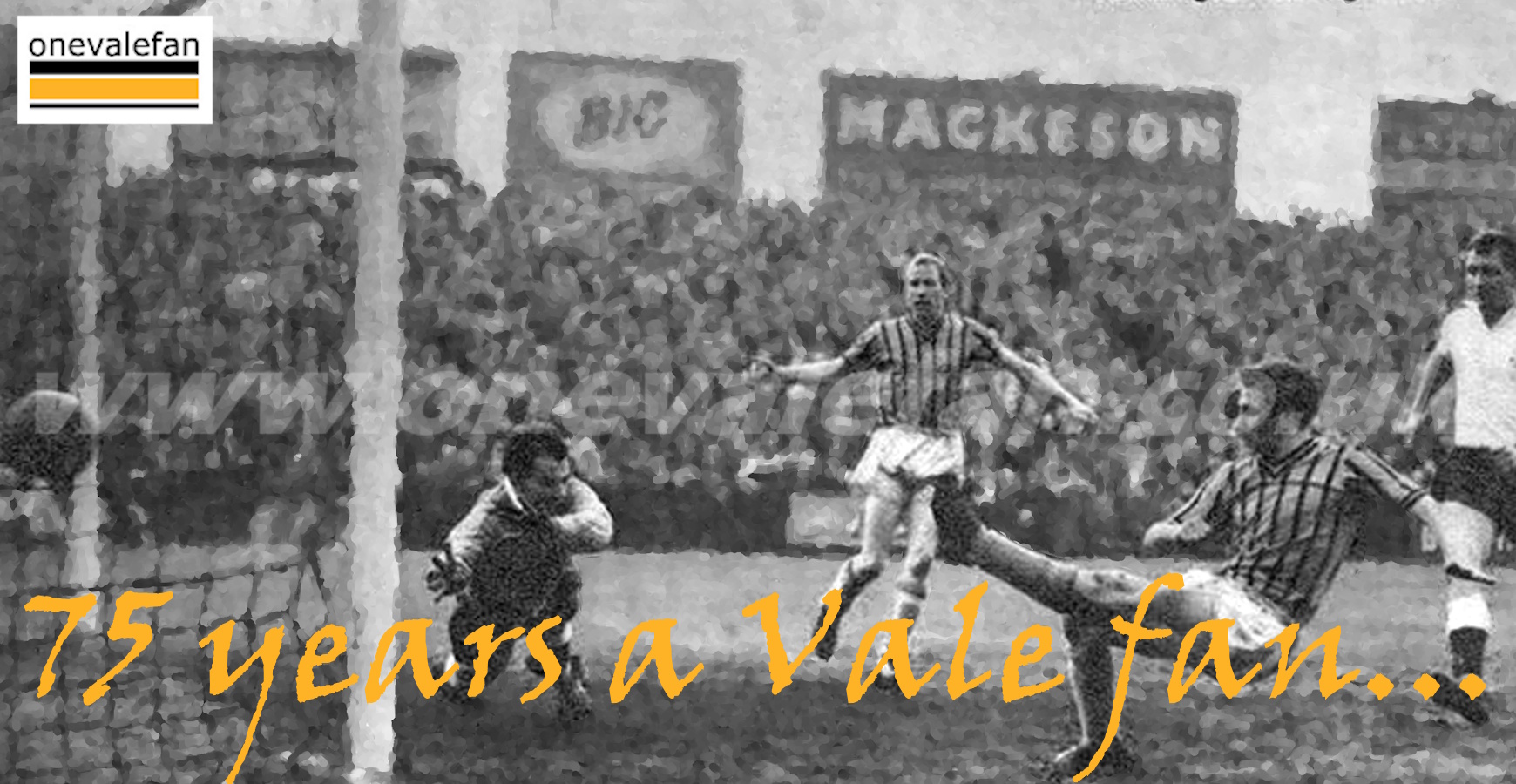
The second instalment of long-standing Port Vale supporter Stuart Dean’s memoirs of decades supporting the club…
This is part two, where Stuart recalls some of the most powerful shooting he’s seen, the rare sight of Frank Wintle and attack-focussed manager Norman Low.
75 YEARS OF SUPPORTING THE VALE - PART TWO

By Stuart Dean
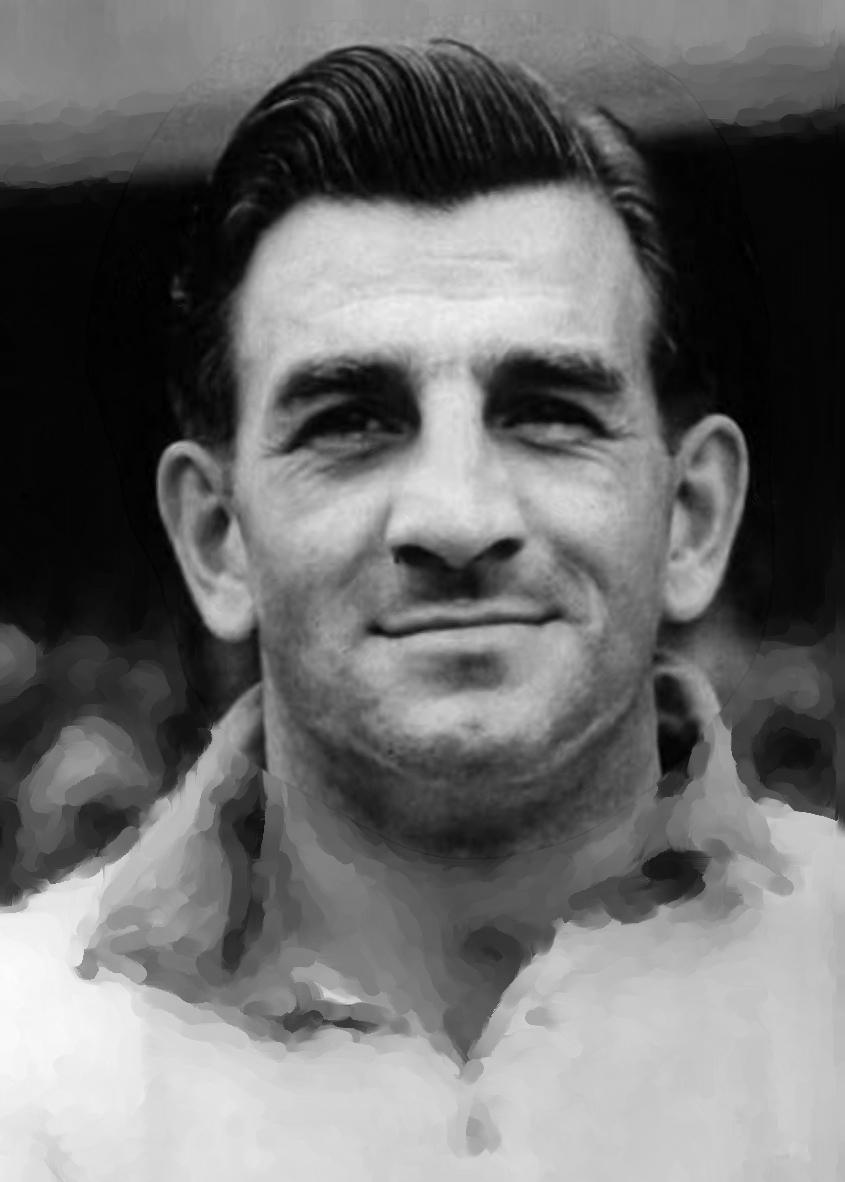
Cyril Done
In December 1954 Cyril Done signed from Tranmere Rovers. Cyril had the hardest shot that I’ve witnessed from a Port Vale player. Cyril ended the season top scorer with 13 goals in 18 appearances. Incredibly, he also finished the season as Tranmere’s top scorer with 17 goals in 20 games. My favourite memory is the four goals he scored against his former club, Liverpool, in a 4-3 victory at Vale Park. This included two penalties – the first taken with his right foot and the second, the winner, taken left footed. What a showman!
The player with the second hardest of shots was John Rowland. John signed from Nottingham Forest in 1962 for £6,000. He was Vale’s top scorer in the 1965-66 season and made 166 appearances and scored 43 goals before being sold on to Mansfield Town for £6,500. He had two very important attributes – a very hard shot and the speed of an Olympic sprinter. Two memories of John stand out. He scored the best goal that wasn’t given. I was in the Lorne Street when John hit a screamer from outside the box. He hit it so hard that on hitting the back of the net it came back into play like a missile. From my viewpoint in the Lorne Street it had clearly hit the back of the net. However, from the referee’s viewpoint it must have looked as if it had hit the bar, because he waived play on.
My other memory of John was a FA Cup tie at Birmingham City in January 1964. Birmingham were in the 1st division. I was surrounded by Birmingham supporters, who reckoned that their left back was the fastest in the league and were completely taken aback when, early on, John kicked the ball past him, gave him 2 yards start and left him behind as though he was towing a caravan. We won the match 2-1 in front of 21,652 with Roy Sproson and Jackie Mudie getting our goals.
John Rowland
This included two penalties – the first taken with his right foot and the second, the winner, taken left footed. What a showman!
Basil Hayward
After promotion in 1954, age was catching up with several of the side and they weren’t able to repeat their heroics of 53/54. Freddie Steele managed to keep them in the second division for two seasons, but the third season resulted in relegation at the end of the 56/57 season and the replacement of Freddie with Norman Low.
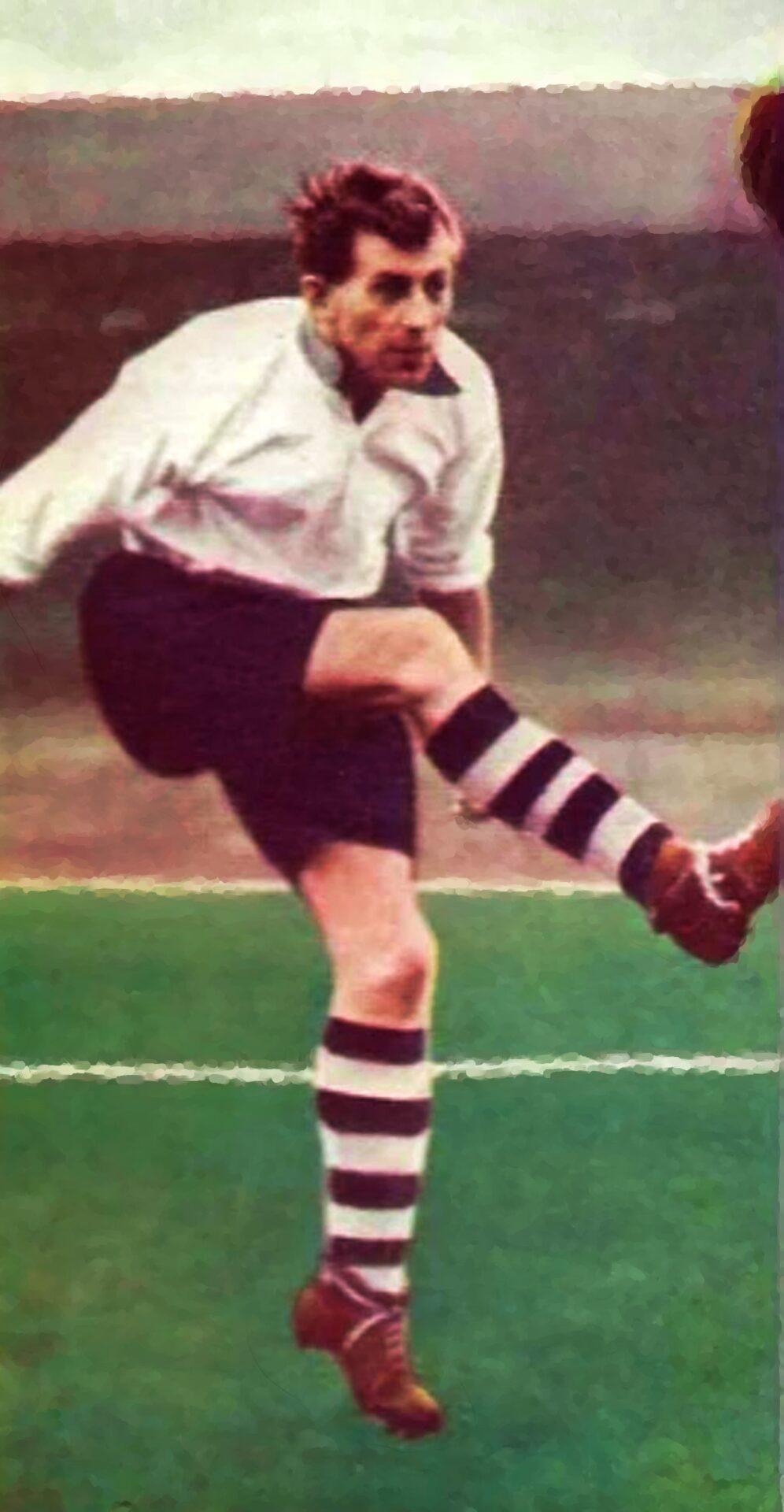
On the 3rd March 1956 I was taken to my first away match against table toppers Sheffield Wednesday at Hillsborough. The coach to the match was delayed and we were just making our way into the ground, when the roar from the 29,789 crowd told us that Wednesday had scored an early goal. It went from bad to worse and we lost 4-0, with Albert Quixall running the show. My second away game came the following season. On the 5th January 1957 I was taken to Oakwell for a third round FA Cup game against Barnsley. The football special broke down on the way, but this time we just made it for the kick-off. Harry Poole scored twice for the Vale in a thrilling 3-3 draw. The replay was at Vale Park on the following Monday, where I witnessed the best own goal I’ve ever seen – a diving header by Basil Hayward. It proved to be the only goal of the game as we exited the cup 1-0 in front of 15,718. On the 6th April of the same year I was taken to Gigg Lane for a 6 pointer against Bury. We lost a bore fest 1-0, which more or less sealed our relegation to the Third Division(South). In the end the two points didn’t help Bury as they finished second bottom, just above the Vale, and were relegated to the Third Division(North). Our last game in Division 2 was at Vale Park against Stoke City in front of 22,395. We drew 2-2, Dickie Cunliffe and Stan Steele getting our goals.
I remember one particular Port Vale game from 1957 very well. On the Saturday morning I was staying at my grandma’s in Alsagers Bank. At about 12:30 the local fishman called on his normal Saturday round. His name was Frank Wintle and he was the long-time captain of the Vale reserve team who played in the Cheshire League. Well, imagine my surprise when, at about 2:50pm Frank ran out to make his one and only first team appearance for the Vale. He played at right back and was up against Nottingham Forest’s Scottish international winger, Stewart Imlach. Imlach was one of the quickest and best wingers in the game at the time.
The rumour was that Stan Turner deliberately took a “sickie”. Imlach, prompted by former Vale inside forward Eddie Bailey, took the Vale defence to bits and we conceded seven and lost the game 7-1. I was visiting relatives in Audley several years back and who called selling fish? None other than Frank. We shared a few memories about the game and he confirmed that Stan had dropped him in it. Ryan Wintle (full name Ryan Frank Wintle), the ex Crewe player, is Frank’s grandson and is named after Frank.
Frank Wintle
There was no need for segregation back in the 50s as there was no violence on the terraces. It was great to mix and share views with opposition supporters – I remember Ipswich Town supporters sharing their whisky with Vale supporters during one fixture. The first violent incident I witnessed at the Vale was a youth launching a bottle at the opposition goalie from the Bycars, only to be marched to the front by a large middle aged lady in a headscarf and handed over to the police. Stoke/Vale rivalry wasn’t as vitriolic in those days either – all my cousins were Stoke fans and I knew Vale fans who regularly attended Stoke home games and vice versa. I recall going to Stoke with one of my cousins for an evening match and popping in the “Staff of Life” for a couple of pints before the game.
My cousin came back from the bar to inform me that “Eddie Clamp’s not playing tonight”. On enquiring why he replied “he’s at the bar drinking whisky”. Imagine our surprise when the players emerged from the tunnel and there was Eddie. Some years later my cousin had the opportunity to raise the matter with Tony Waddington (the Stoke manager). Tony reckoned he was quite happy for Eddie to have a few whiskeys before a game as it improved his performances.
That reminds me that John Nicholson had a reputation as a heavy drinker. In fact there was very much a drinking culture throughout football. When Stanley Matthews took the job as Vale manager he tried to impose his own lifestyle on the players and John’s performances suffered dramatically and resulted in a transfer to Doncaster Rovers. Tragically John was killed in a traffic accident while still playing for Doncaster.
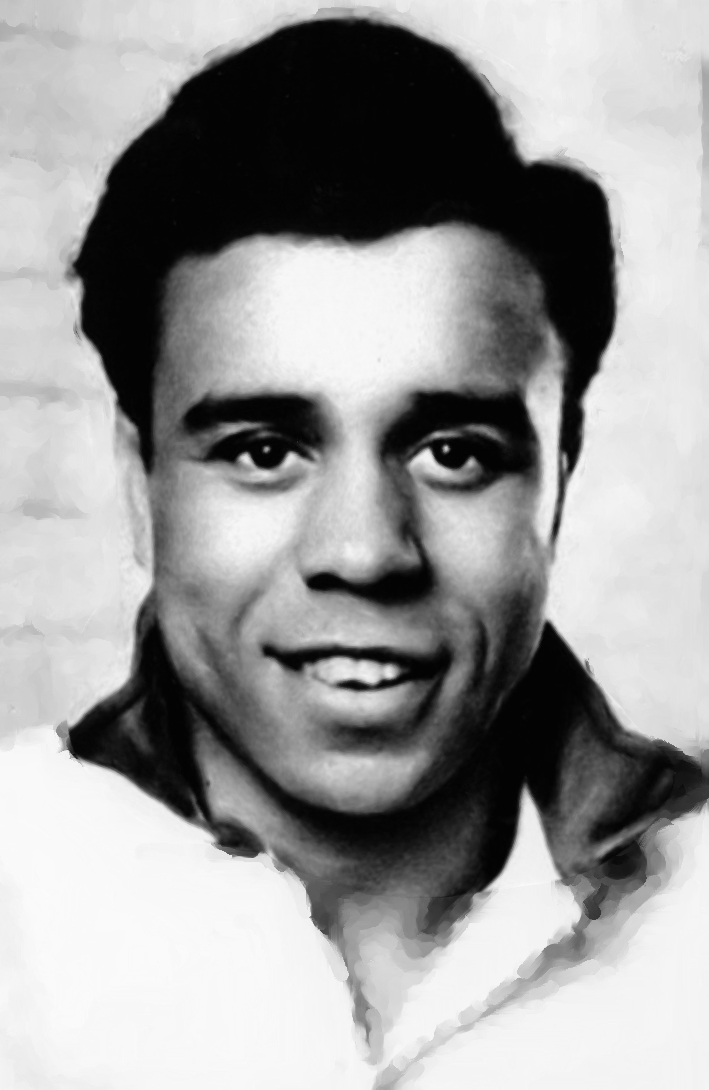
Foreign players were also rare and when they did play at Vale Park you remembered them. Charlie Williams caused a great deal of amusement for us kids. Charlie played full back/centre half for Doncaster and saying that he was vocal on the pitch was an understatement. To hear such a broad Yorkshire accent from a black man tickled us pink on the Lorne Street wall. Later he became Britain’s first well-known black stand-up comedian. He became famous from his appearances on Granada Television’s The Comedians and ATV’s The Golden Shot, delivering his catchphrase, “me old flower” in his broad Yorkshire accent.
Charlie Williams
Rudolphi Ugolini
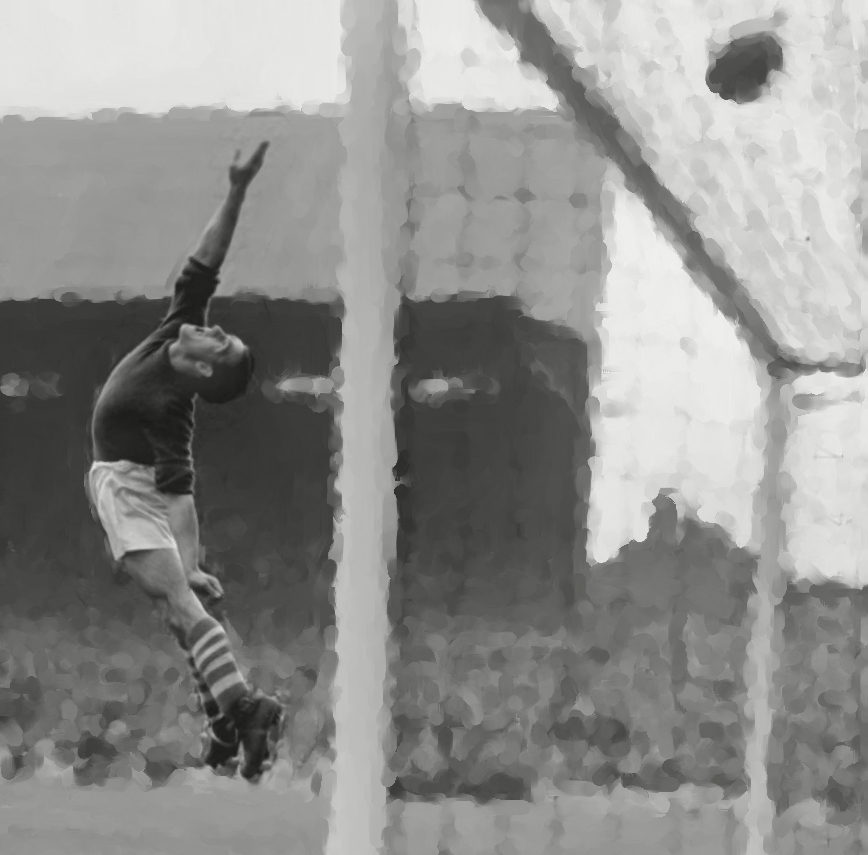
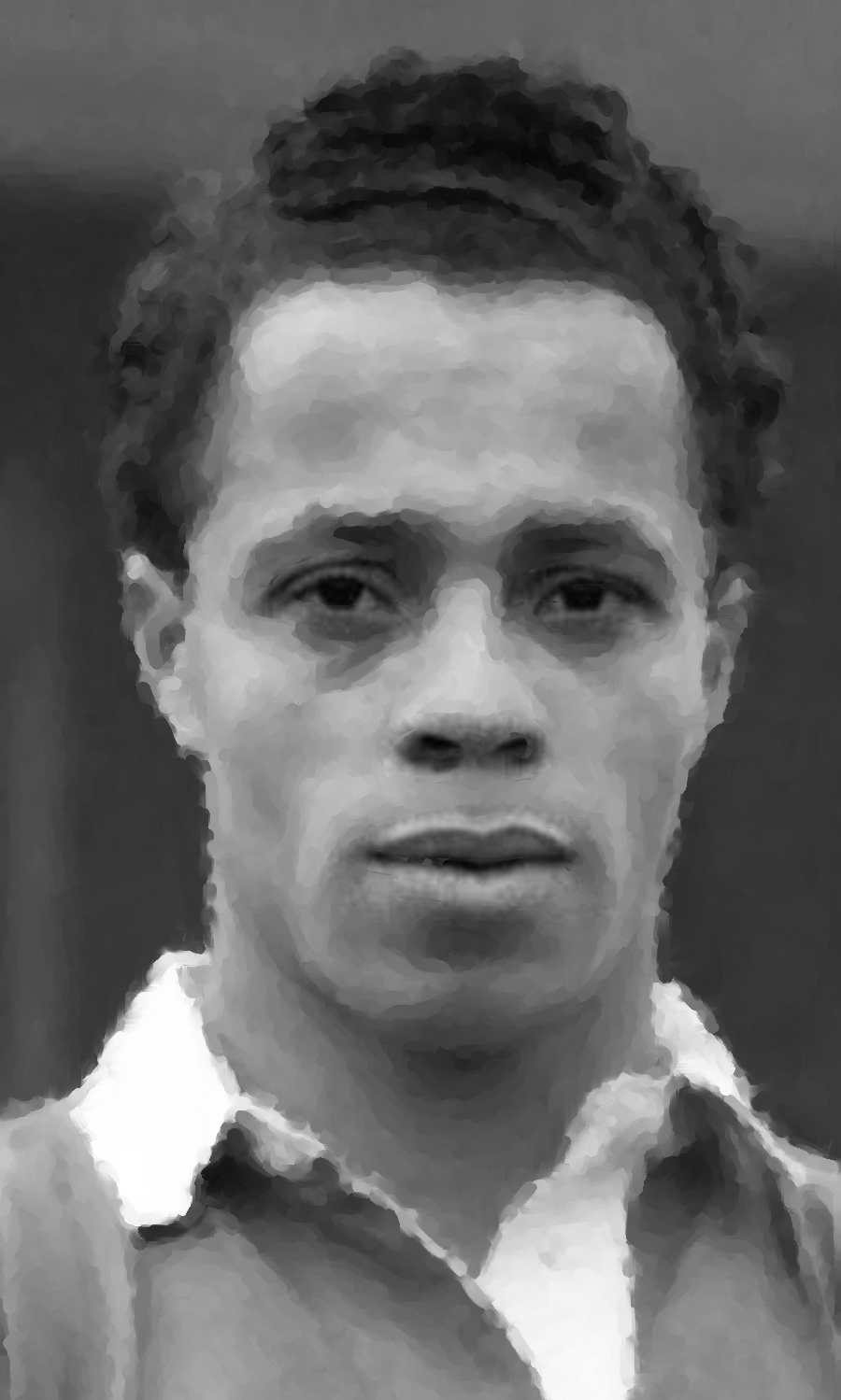
The other two foreign players I remember played for the same team – Middlesbrough. Their goalkeeper was Rolando Ugolini, an Italian, and Lindy Delapenha, a Jamaican, played on the left wing – who, despite limited appearances for his first club, Portsmouth in the 1948/1949 and 1949/1950 seasons, nevertheless played a part in the club’s two title-winning sides and with it became the first black player to win a First Division championship medal.
After relegation from the Second Division in 1957 and the resultant dismissal of Freddie Steele as manager, we played in the Southern section of the Third Division – which was regionalised in order to minimise travelling costs.
Unfortunately, this was the last season of regionalisation, and the newly introduced Fourth Division came into existence at the end of the season. The bottom two clubs in the Second Division, together with the clubs finishing second to twelfth in the two Third Divisions, formed the new Third Division. This meant relegation for the teams finishing below 12th in the two Third Divisions. Under new manager Norman Low, the side started brightly, winning four of their first six fixtures.
The attacking policy soon paid off as Stan Steele, Jack Wilkinson, and Harry Poole all reached double figures in goals by mid-season. Despite this promising form, a poor run after Christmas — highlighted by eight defeats in their final 12 matches – dragged them to a 15th place finish, and they were placed in the newly formed Fourth Division for the 1958–59 campaign. Relegation two years running was hard to take at the time.
Lindy Delapenha
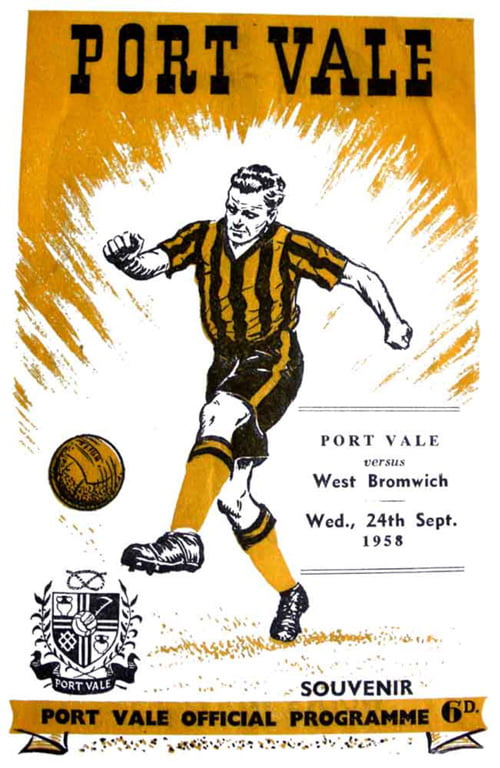
The programme cover for the first floodlit match shows the new kit design
The 1958/59 season was first time we played in black and amber, the new kit introduced by Norman Low. On 24 September 1958, Vale Park saw its first match under the new £17,000 floodlights, as the club beat West Bromwich Albion 5–3 in a friendly. Ronnie Allen played for the “Throstles” and David Burnside entertained the crowd with his incredible skills juggling a football.
I also remember the game for the fact that I watched it with my granddad, who was a life-long Valiant, for the very last time as he died shortly afterwards. The Vale played with a freedom and attacking intention that season that I have never experienced since and ended up being promoted as Champions. Having experienced Vale being Champions twice in 5 years, I never in my wildest dreams imagined I wouldn’t experience the feeling again.
It was during Norman’s (Low) stay with the Club that Port Vale played the best football in my time. The reason was Norman’s insistence on attacking play. He is the only manager I have ever heard tell his team to go out and entertain the public. Some of Norman’s beliefs would make today’s managers shudder. He would not tolerate defensive play at any price and would not hear of going away for a point. As a result we used to win games 6-4, 5-3 and 5-0…
Roy Sproson on Norman Low
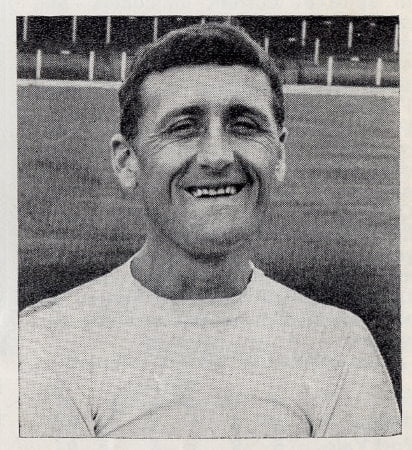
Roy Sproson
Under manager Norman Low, Vale stormed to the Fourth Division championship, amassing 64 points, finishing four clear of Coventry City, and scoring a club-record 110 league goals across 46 matches. A potent forward line — with Stan Steele, Jack Wilkinson, Graham Barnett, Harry Poole, Brian Jackson and Dickie Cunliffe all reaching double figures — drove the attack and provided consistent goal returns.
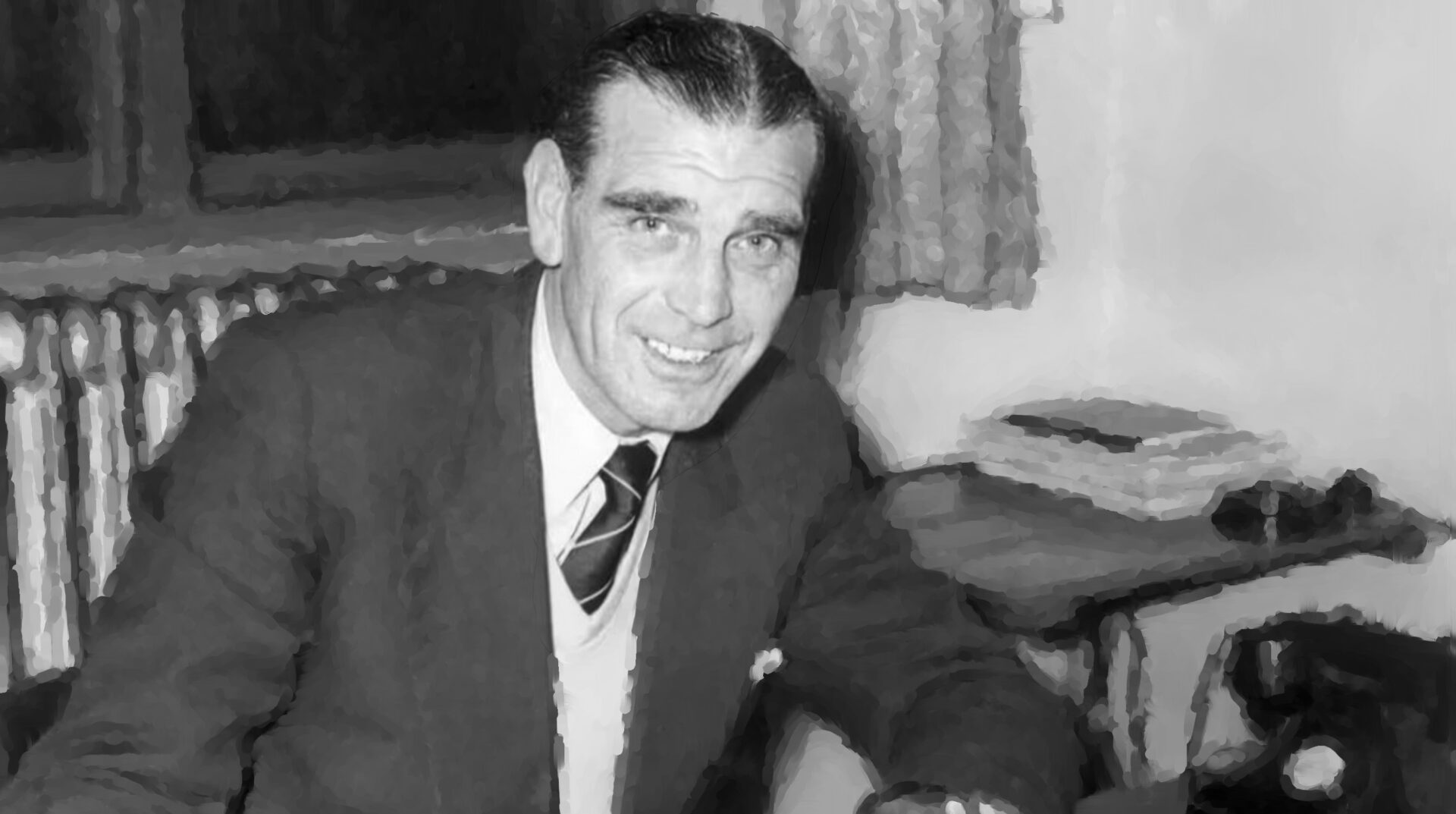
Norman Low
In the FA Cup, Vale were surprisingly eliminated in the First Round, with a narrow defeat at Torquay United denying further progress. At home, Vale Park saw an average attendance of 12,757, dropping to a low of 8,851 against Chester on 21 February 1959 and a high of 20,916 against Coventry City on 4 April 1959 — reflecting solid support for a dominant campaign despite an early cup exit. Several landmark achievements defined the season; notably, Vale endured a rough start with just two points from their first five home games, before turning Vale Park into a fortress. A mid season unbeaten run of twelve league games, capped by an emphatic 8–0 Boxing Day victory over Gateshead, underlined their attacking might.
Manager Norman Low reinforced the squad with astute signings such as Brian Jackson, Roy Pritchard, Peter Hall, and debutants Ken Hancock and Graham Barnett, whose contributions proved decisive. Veteran stalwart Roy Sproson also returned to defensive duties, anchoring a side filled with goals and cohesion. Overall, the campaign represented a spectacular turnaround for Port Vale. From relegation disappointment came a remarkable resurgence: a division title, record goalscoring, and a cluster of impressive forward performances.
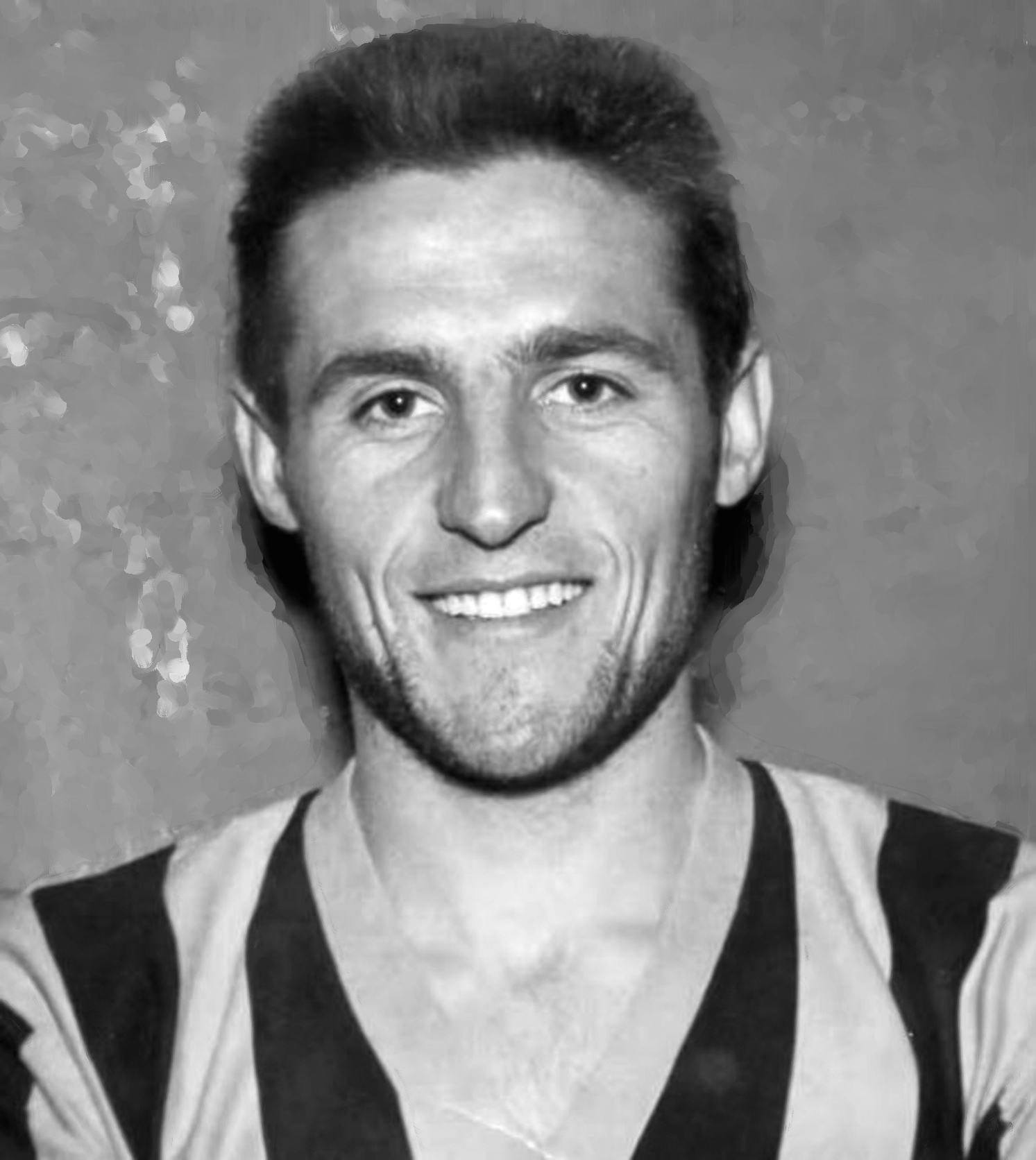
Graham Barnett
The following season saw us consolidate our position in Division Three and enjoy a FA Cup run to the Fifth Round. I remember Graham Barnett stating that he wouldn’t shave until we were knocked out of the Cup. He ended up with quite a beard. 30th January1960 FA Cup Round 4 saw us drawn away at Scunthorpe United.
I remember this match quite well. I travelled on a Poole’s Coachways bus from Alsagers Bank. We had all four seasons on the journey to Scunthorpe. There were flooded roads and very heavy rain as we left the Potteries. This turned to snow and fog over the moors. By the time we got to the Old Show Ground it was cloudless skies and bright sunshine. We were in a stand that only ran for part the length of the ground and were sat right at one end close up to the glass sides – which hadn’t been washed in a month of Sundays – and we couldn’t see the goal that Vale were attacking.
Cliff Portwood scored the only goal of the match very early on. We saw him commence his run along the left wing but only knew he had scored by the reaction of the Vale supporters who sat with better views. We moved after that and stood at the back of the full stand. I also remember listening to the football results on the coach on the way home. Crewe had drawn 2-2 at home to Tottenham Hotspur. They lost 13-2 at White Hart Lane the following week. Cliff was one of the best dressed Vale players ever. A winger and inside forward, he scored 96 goals in 252 league games in a 14-year career in the Football League. He spent 1955 to 1959 at Preston North End, without making an appearance, before he was sold on to Port Vale for £750. He played 74 games and scored 38 goals for the Vale before being sold on to Grimsby Town for £6,000 in July 1961. He later became a successful singer and television personality in Australia.
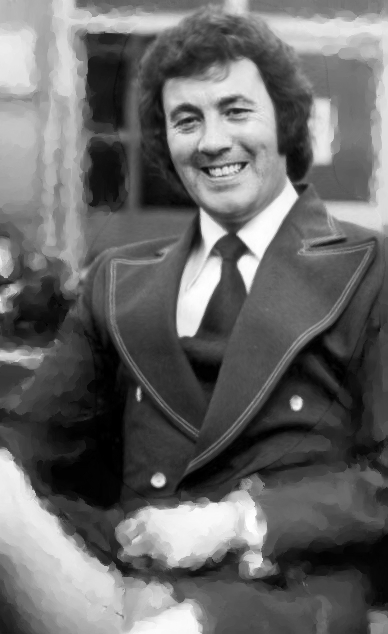
Cliff Portwood
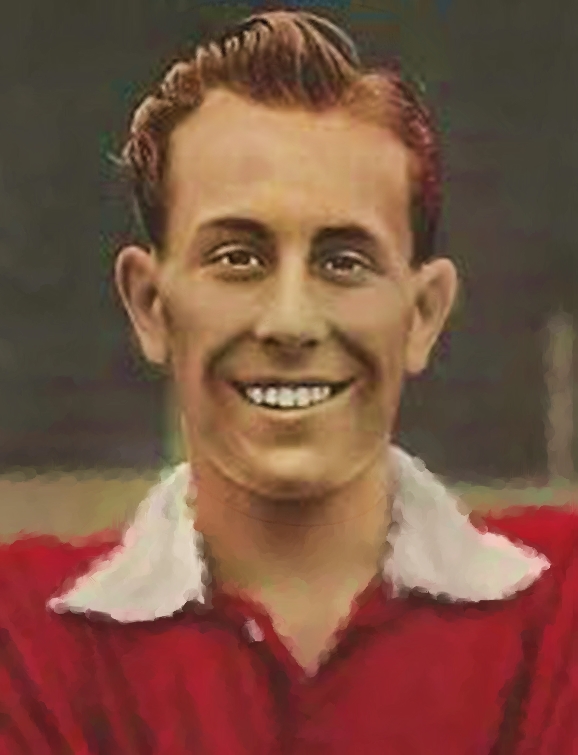
Brian Jackson
In the 5th round we were drawn at home to Aston Villa. The game was an all ticket affair with 49,768 packing Vale Park. I watched the game from the Railway Paddock, which was all standing at the time, and I remember it being a tight squeeze in there. Brian Jackson gave us the lead with a penalty in front of the packed Bycars. The Villa goalie, Nigel Sims, got his finger tips to it but couldn’t prevent the ball from hitting the back of the net. Unfortunately Villa proved to be too good and we lost the tie 1-2. Brian was an outside-right and after playing seven years at Anfield, he was sold to Port Vale for £1,700 in July 1958. He helped us win the Fourth Division title in 1958–59, before he was sold to Peterborough United for £2,000 in June 1962. He later played for Lincoln City, Burton Albion, and Boston United. He played 178 times for the Vale scoring 34 times.
Remembering the tight squeeze at the Villa game reminds me of two other games that I attended. On the 10th October 1960 a coach trip was organised from Audley to go to the Wolverhampton v Spurs match. Spurs had won all of their first ten league matches, but this game was to be their greatest challenge – away to Champions Wolves.
We arrived at the ground before midday and gained entrance early behind one of the goals. This was just as well as they shut the gates two hours before kick-off with the ground bulging with 52,829 inside. Spurs passed the test with flying colours, winning 4-0 with goals from Blanchflower, Jones, Allen and Dyson. Cliff Jones, the Wales left-winger, absolutely terrorized the Wolves defence. I remember being packed in so tight that you had no control over your movement – you just went forward when the crowd went forward. I lost consciousness at one point, but when I came round I was still packed in and moving with the crowd.
The only other time I’ve been so tightly packed in was at a FA cup-tie at St. James Park in January 1968 when Newcastle played Carlisle in front of 56,569. I was on the huge open terrace known as the Popular Side. I remember that John Rudge was playing centre-forward for Carlisle, who won the match 1-0. Ollie Burton, the Newcastle centre-half, missed the chance to equalise late on from the penalty spot.
However, my best memory of the day was the peanut seller. He walked around the periphery of the pitch selling paper bags full of loose peanuts. The supporters threw their money from the terrace and then stuck their hand in the air. The seller threw a bag of peanuts hitting the hand without fail. He should have played cricket for England! In all my time watching football up and down the country, I’ve never seen anything like it.
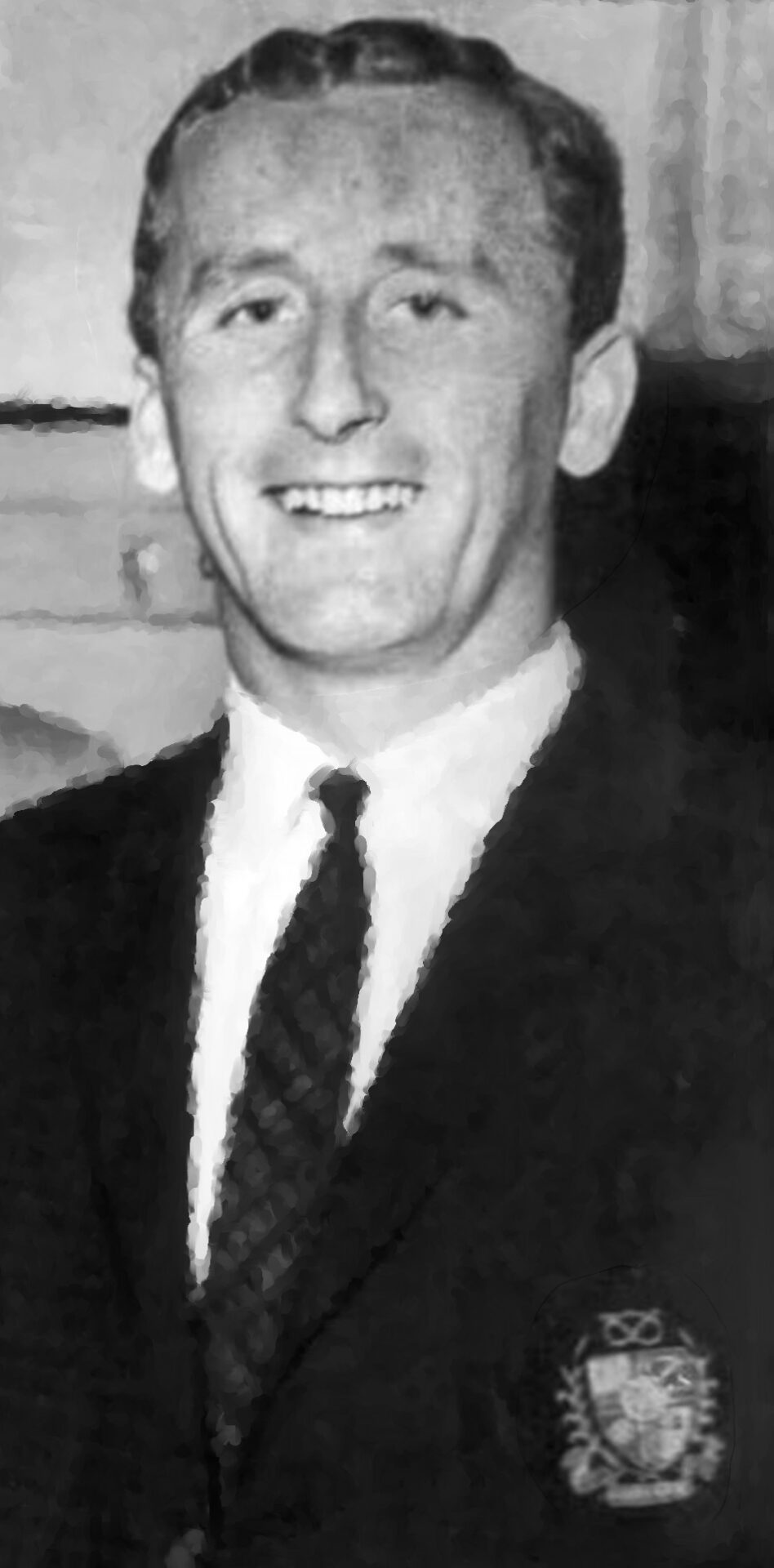
Harry Poole
In all my time supporting the Vale, my most enjoyable match was at home to Bury in Division 3 on New Year’s Eve 1960. We won a real end-to-end game 4-3, Harry Poole; Bert Llewellyn; Brian Jackson and Cliff Portwood scoring the goals. Bury were champions that season scoring 108 goals. Vale finished 7th scoring 96 goals. Tony Richards of Walsall (later of Port Vale) was the league’s highest scorer with 36. Cliff Portwood was Vale’s leading scorer with 24 league plus 2 cup goals, although Bert Llewellyn scored 20 for the Vale in half a season, having joined from Crewe mid season.
Stoke-on-Trent born Harry Poole played at half-back for Vale between 1953 and 1968, first as an amateur before becoming professional in 1956. Poole played in the Vale side that won the Division Four title in 1958-59. Vale scored a club record 110 goals that season – of which he netted 16 in 36 appearances. The late former BBC Radio Stoke and Stoke Sentinel journalist John Abberley once described Poole as “one of the best wing-halves ever produced in the Potteries”, following his performances in the 1960-61 season. The one-club man played under four different Vale managers – Freddie Steele, Norman Low, Jackie Mudie and Stanley Matthews.
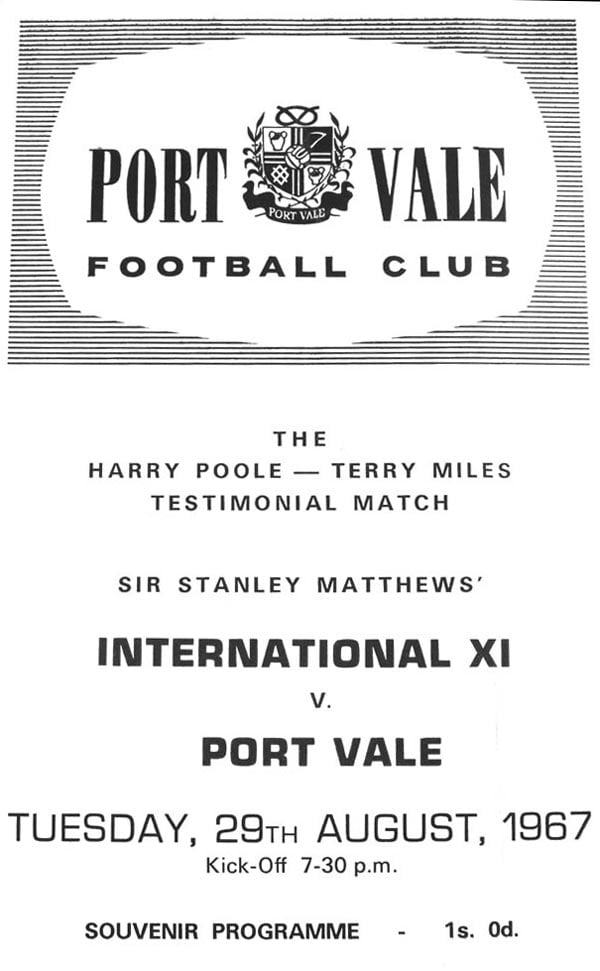
He shared a testimonial match with Terry Miles, in August 1967, before retiring in 1969 after a season with nearby non-league side Sandbach. Poole then became a Vale season ticket holder for more than 50 years. Harry, who started more Vale games than any player other than Roy and Phil Sproson, scored 79 goals along the way, including his spectacular free kicks. He would recall:
I got the idea from watching Brazil on the television, although I also remember having a kick-about with my mates on the fields where we lived in Bucknall. One of the dads was there trying to swerve the ball and we all had a go. When I joined the Vale I did practice them, it was about the only practice we did! No, that’s a lie, we did practice taking corners and we used to try coming up with clever free-kicks, but they didn’t work very often. But in those days goalkeepers would line their wall up dead level with their post because if you hit it straight it couldn’t go in. I thought one day ‘I can probably swerve it round there a bit’, and I took it from there. Nobody really did it then, though. One of the first ones I scored from was at Queens Park Rangers when Mike Pinner was in goal. I swerved the free-kick and it went in, but he ran round the goal to fetch the ball thinking it must have gone wide.”
I remember his free kicks with amazement. Giving the Vale a free kick around the edge of the penalty area was as good as giving us a goal when Harry was playing. He never missed, swerving it round the wall and just inside the upright every time.
I remember a game in January 1961 for all the wrong reasons. It was my first away match without the supervision of my father. I caught the PMT bus from Bignall End and got off at Etruria station to catch the train. I think it was a football special but if it wasn’t I would have had to change at Derby. The game was at Saltergate and a boring 0-0 draw, visibility moderate at best and the Vale never looked like scoring. Neither did Chesterfield at that.
The real excitement started once I got off the train at Etruria. The fog was so thick that you could hardly see your feet. Getting off the station was a real challenge and at one stage I found myself on the line -a very frightening experience. Eventually having found the steps out of the station I managed to find the lamp post upon which the bus stop was located. The smog was so thick that you couldn’t see the lamp. No traffic was about – the thickness of the fog making driving impossible.
There were two other Vale fans at the bus stop debating what to do. They were from the Milehouse area and I joined them as they followed the kerb, counting off streets trying to locate Sandy Lane. We then followed our noses until we hit Liverpool Road. At the Milehouse they kindly offered me a bed for the night. I declined this because I knew how worried my parents would be and I was now on fairly familiar territory. So on through Chesterton, the visibility still the same, past the brick works and on to Audley Road via Castle Street. At the top of Bignall Hill I walked out of the Potteries bowl and the fog.
What a transformation! A clear sky covered in stars (no street lighting up there in 1961) and the lights of the Cheshire plain visible into the far distance. I quickly descended to Bignall End where I met a worried father waiting on the main road. When I got in the house he sent me to look in the mirror. I looked as though I had just finished a shift down the pit. I was as black as the ace of spades. That was the worst fog I’ve ever been in. Thankfully the pot banks were starting to move away from coal furnaces to electric and such smogs became a thing of the past.
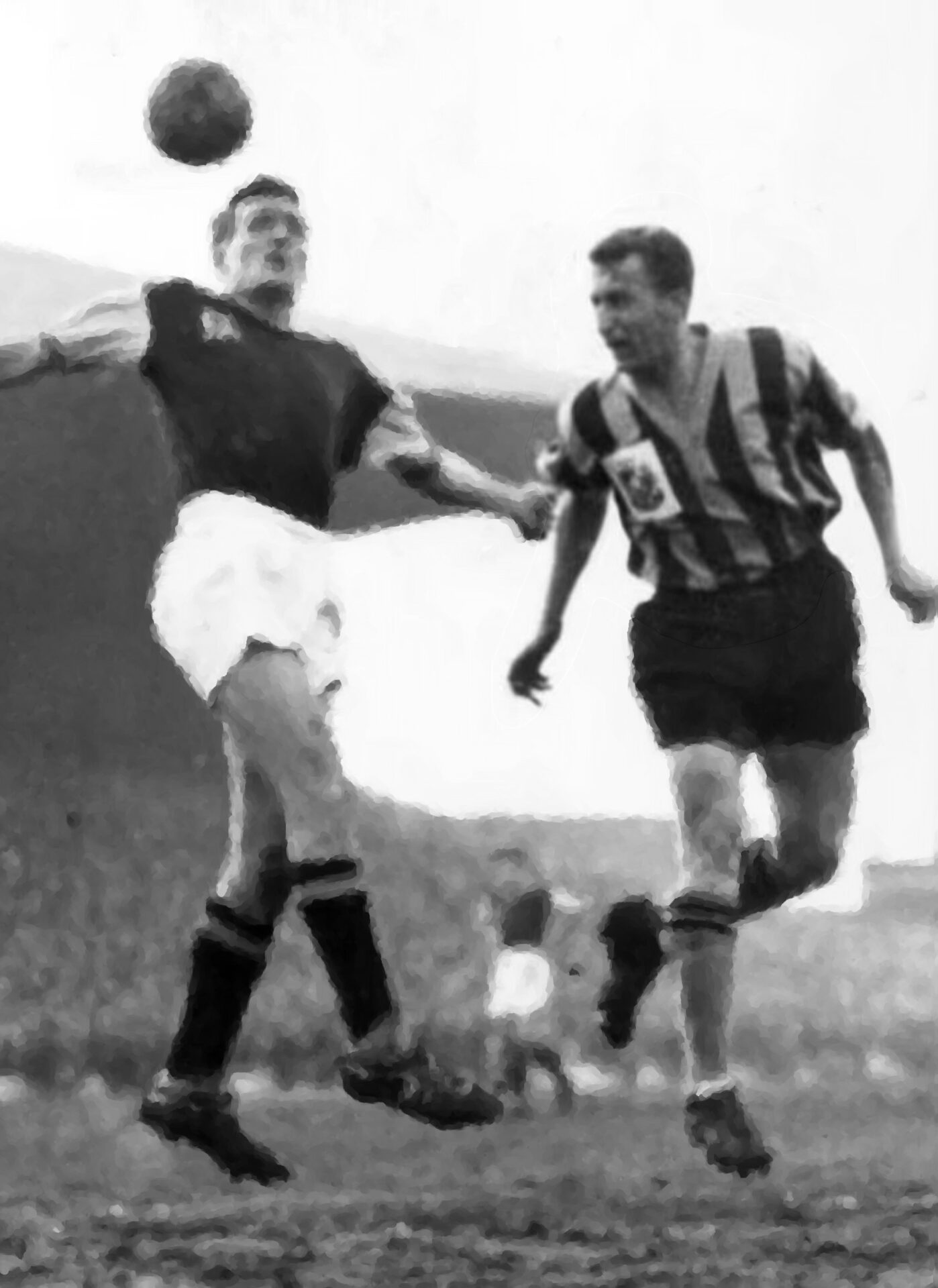
Harry Poole heads a goal
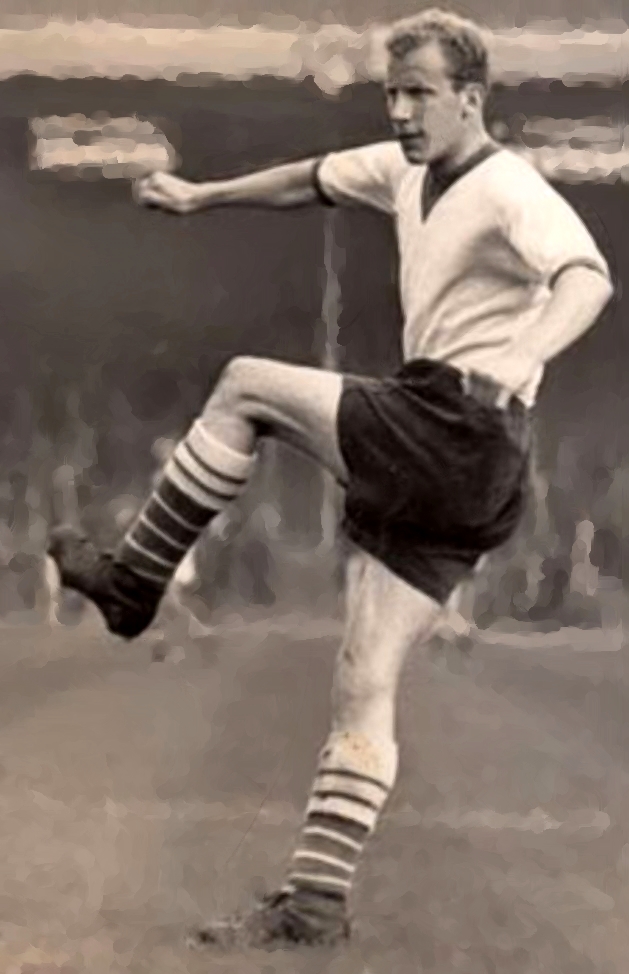
Arthur Longbottom
In November 1961 we were drawn away at Crewe Alexandra in the second round of this FA Cup. At the time my father used to drink in the “Rising Sun” at Shraley Brook, where he was friendly with one of the Crewe Directors. It turned out that the Director was away on business and couldn’t attend the tie. He offered my dad his ticket in the Director’s Box, which he passed on to me.
When Arthur Longbottom scored first for the Vale I jumped out of my seat celebrating as though I was at Vale Park, only to quickly realise that all the Crewe Directors were giving me icy glares. I cut my celebrations short and sat down quite embarrassed. I needn’t have worried – when Crewe equalised the Director’s and wives were all out of their seats celebrating wildly. We won the replay on the Monday 3-0 with 2 goals from Arthur and one from Bert Llewellyn in front of 19,029.
I remember, shortly after this, going for a night match at Vale Park and, when I read the program, wondering who the new signing was – a certain A Langley at inside forward. I was quite disappointed when Arthur Longbottom ran onto the pitch – it turned out that he’d changed his name to Langley by deed poll. He’d obviously taken exception to us Vale supporters calling him “short-ass”.
Ralph Hunt joined Port Vale in December 1961 after manager Norman Low paid out a £3,500 fee. He turned up on a motorbike, ten minutes before the kick-off, on 16th December to make his Vale Park debut against Shrewsbury Town, scoring a hat-trick in what was a 4–1 victory. His 3 goals came in a nine minute spell in the first half and were all scored at the Hamil Road end.
It was the best centre forward play I’ve witnessed by a Vale player. His first goal was from a through ball that he just let run past him before walloping a right foot drive into the corner from about 20 yards from goal. His next goal was a bullet header from a right wing corner, executed despite the close attention of a couple of defenders. Believe it or not I can’t remember anything about his hat-trick goal. Despite securing six goals in 14 games he lost his place in March and was sold on to Newport County for a £2,000 fee in July 1962.
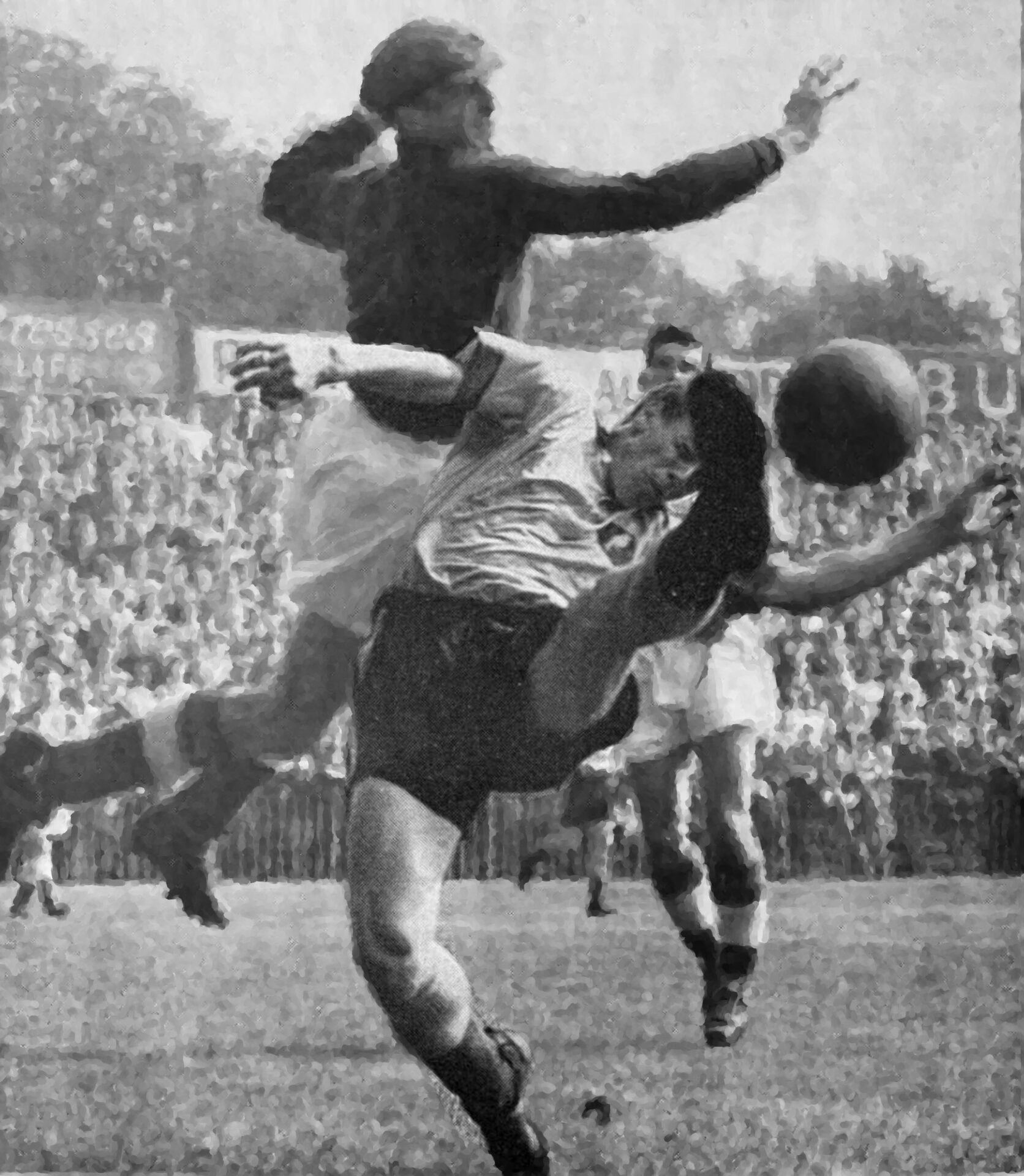
Ralph Hunt challenged by Reg Matthews
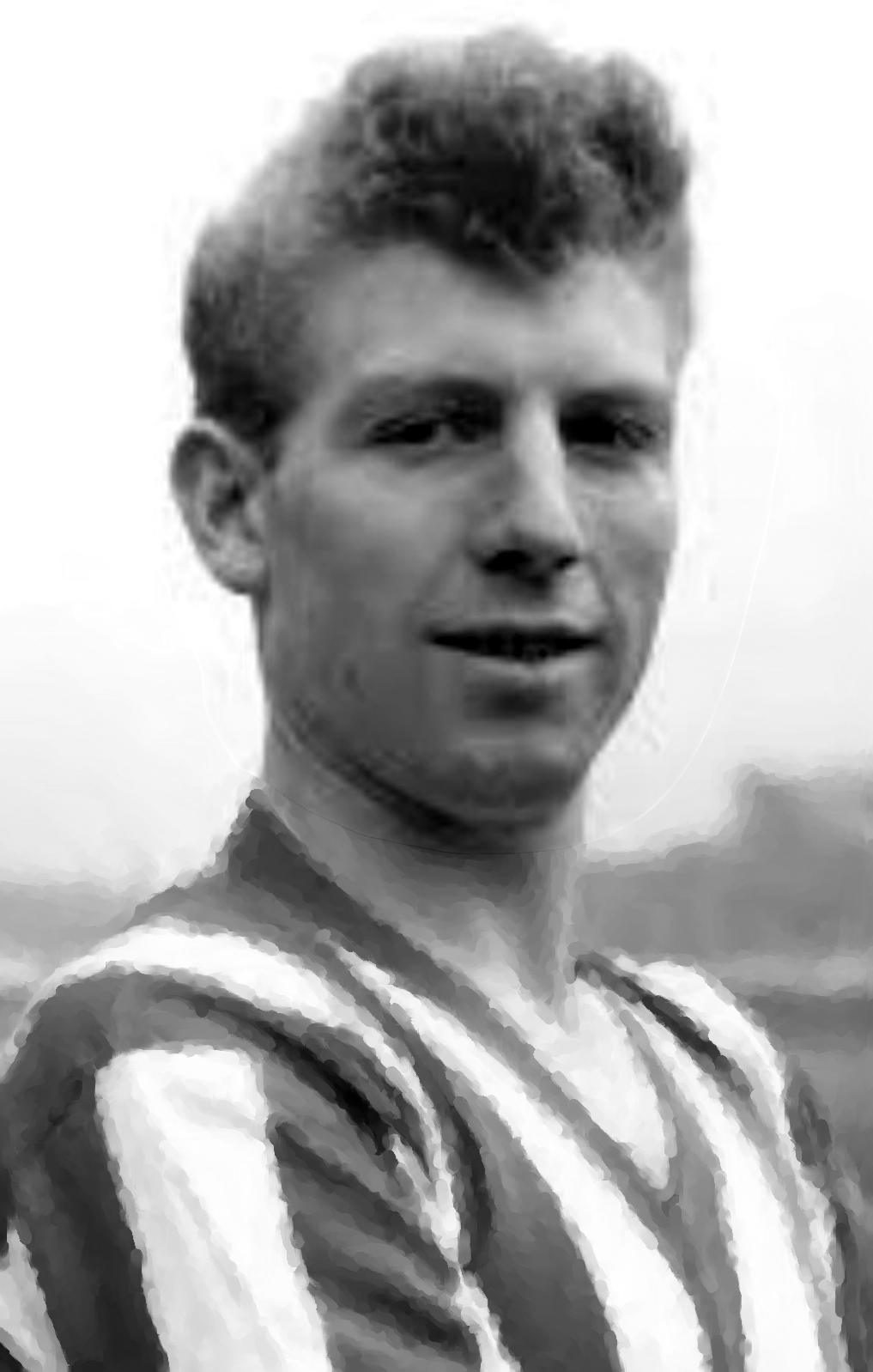
Colin Grainger
In January 1962 in the fourth round of the cup, we travelled to Sunderland’s Roker Park, holding them to a goalless draw in front of 49,468 noisy Sunderland fans – not even £50,000 star striker Brian Clough could master the Vale defence as Ken Hancock made an excellent late save to force a replay. For the return, 28,226 witnessed a 3–1 victory for the Vale over the Second Division side.
The Vale were missing Ralph Hunt due to him being cup-tied and Stan Steele through suspension. Hancock went down injured with twisted ankle ligaments in the first minute, though played on and was aided by two pain-killing injections at half-time. Brian Jackson opened the scoring after capitalising on a missed clearance on 37 minutes. Harry Poole celebrated his 27th birthday by scoring from 25 yards out shortly after the start of the second half. Arthur Longbottom made it three after working an opening on 79 minutes.
The star of the show was Colin Grainger, the 28 year-old ex-Sunderland and England winger, who had joined Port Vale for £6,000 at the start of the 1961-62 season, in what the Sentinel described as “a magical piece of soccer history.”
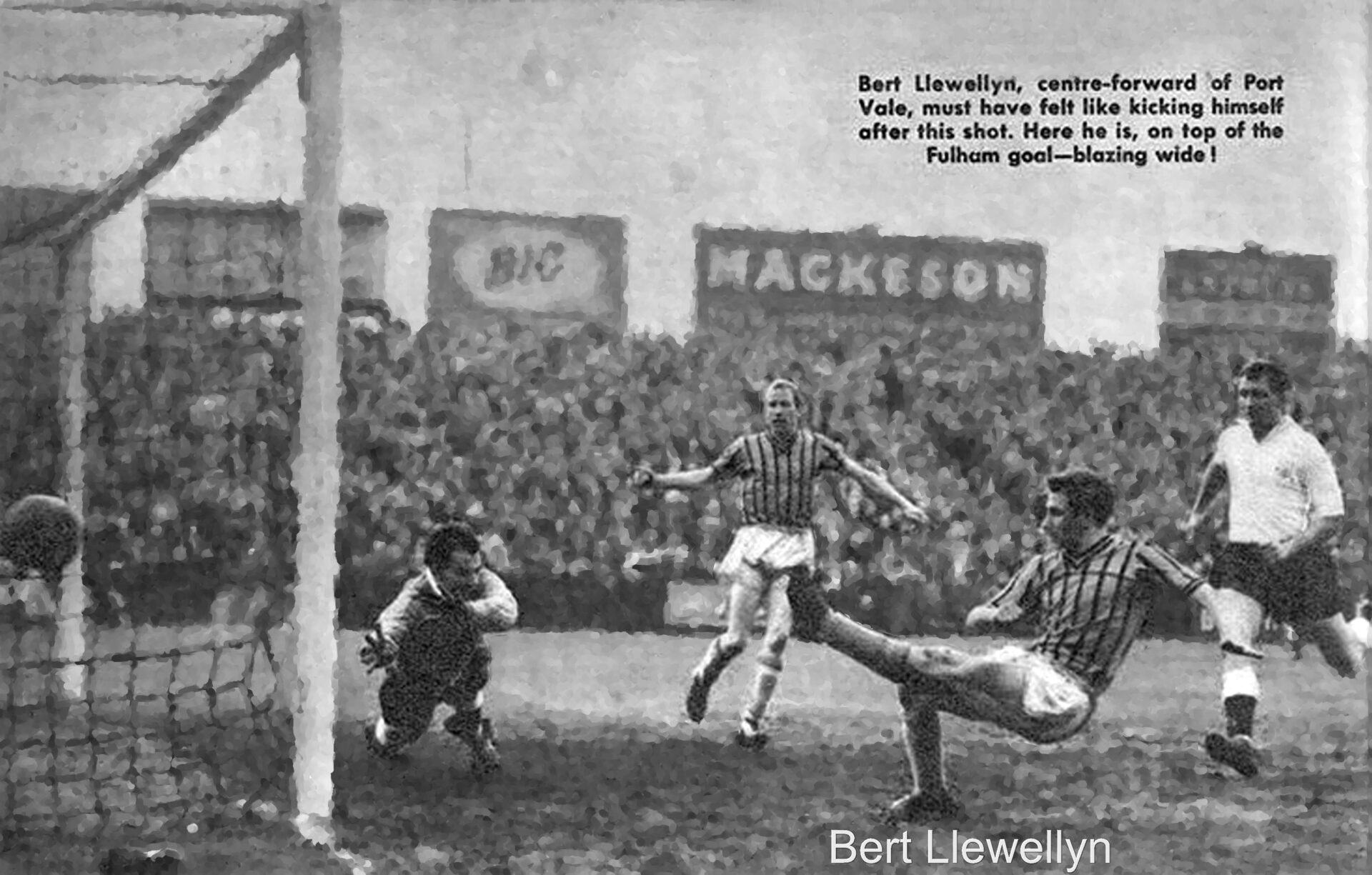
In the fifth round, they were beaten by First Division Fulham at Craven Cottage with a disputed late penalty. The referee also gave the “Cottagers” a goal kick when the ball had in fact crossed the line for a goal – to the fury of the Vale supporters. From my viewpoint Brian Jackson’s shot beat Tony Macedo all ends up, hit the inside of the goalkeepers left hand post and trickled along the goal line followed all the way by Bert Llewellyn. Why Bert didn’t put it in the net I could never fathom – he must have thought it had crossed the line. However, Bert waited until it crept past the opposite post then gleefully booted it into the crowd behind the goal. That counts as the worst miss by a Vale player that I have witnessed.
The team were awarded the Sunday Pictorial Giant-Killer Cup and the players each given a set of gold cufflinks. My father and I travelled to London by train on a soccer special packed with Vale fans. One of the fans in our compartment lost his ticket on the way to London. On the way back he told us that he’d gone to the main entrance at the Cottage with his sob story, met Tommy Trinder, who had taken him under his wing and sat him next to himself in the Director’s box. He found the experience a bit off putting as the Fulham Board members never got more excited than clapping politely – very different to my experience in the Crewe Director’s box earlier in the cup run.
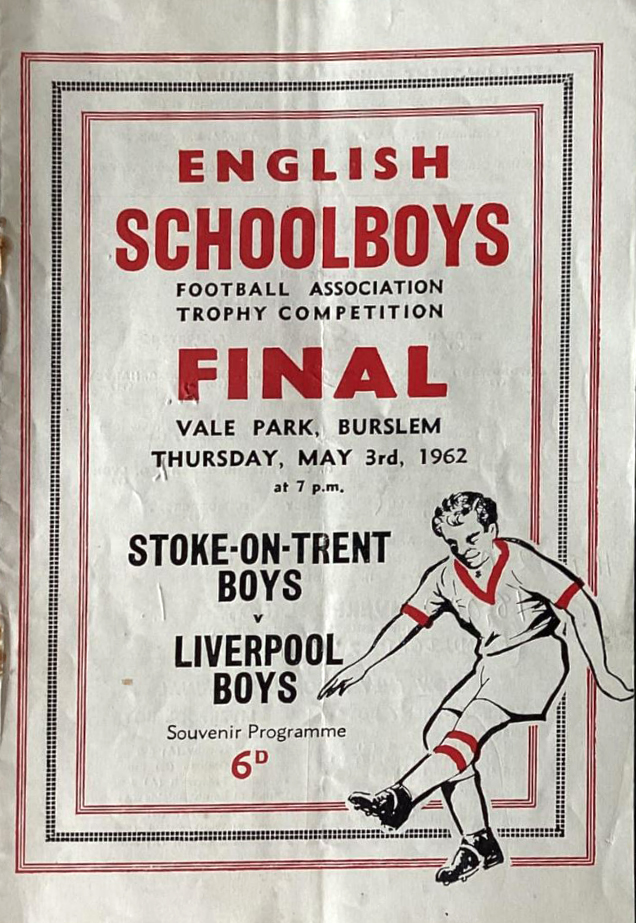
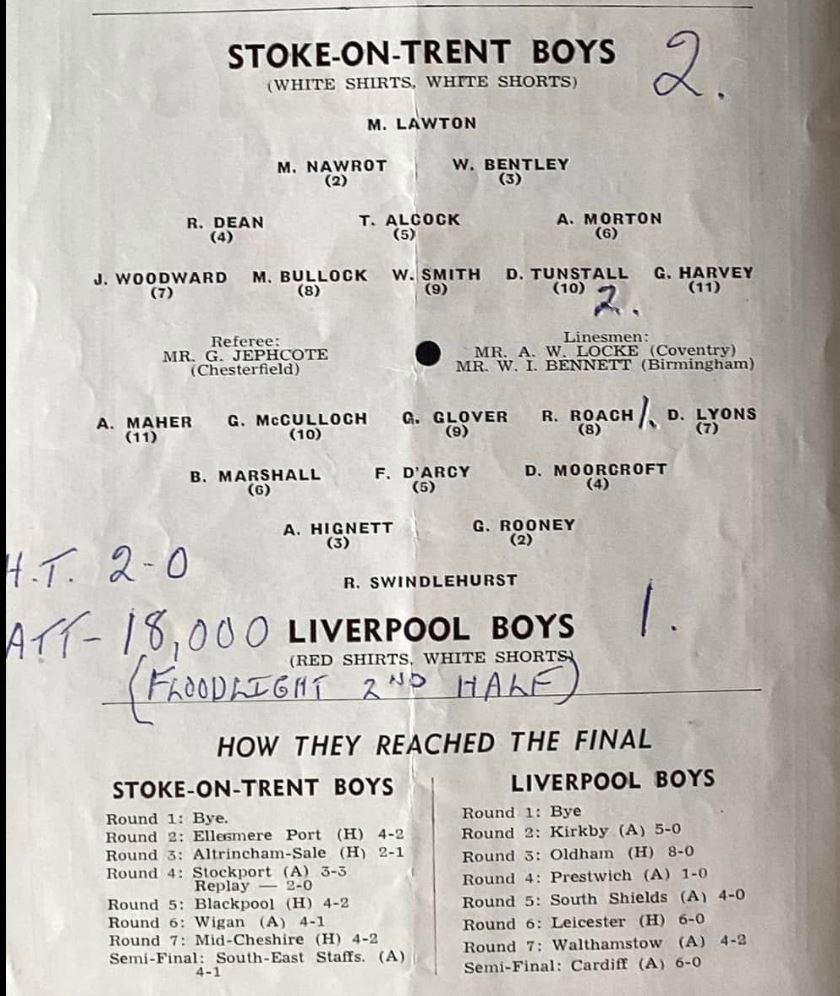
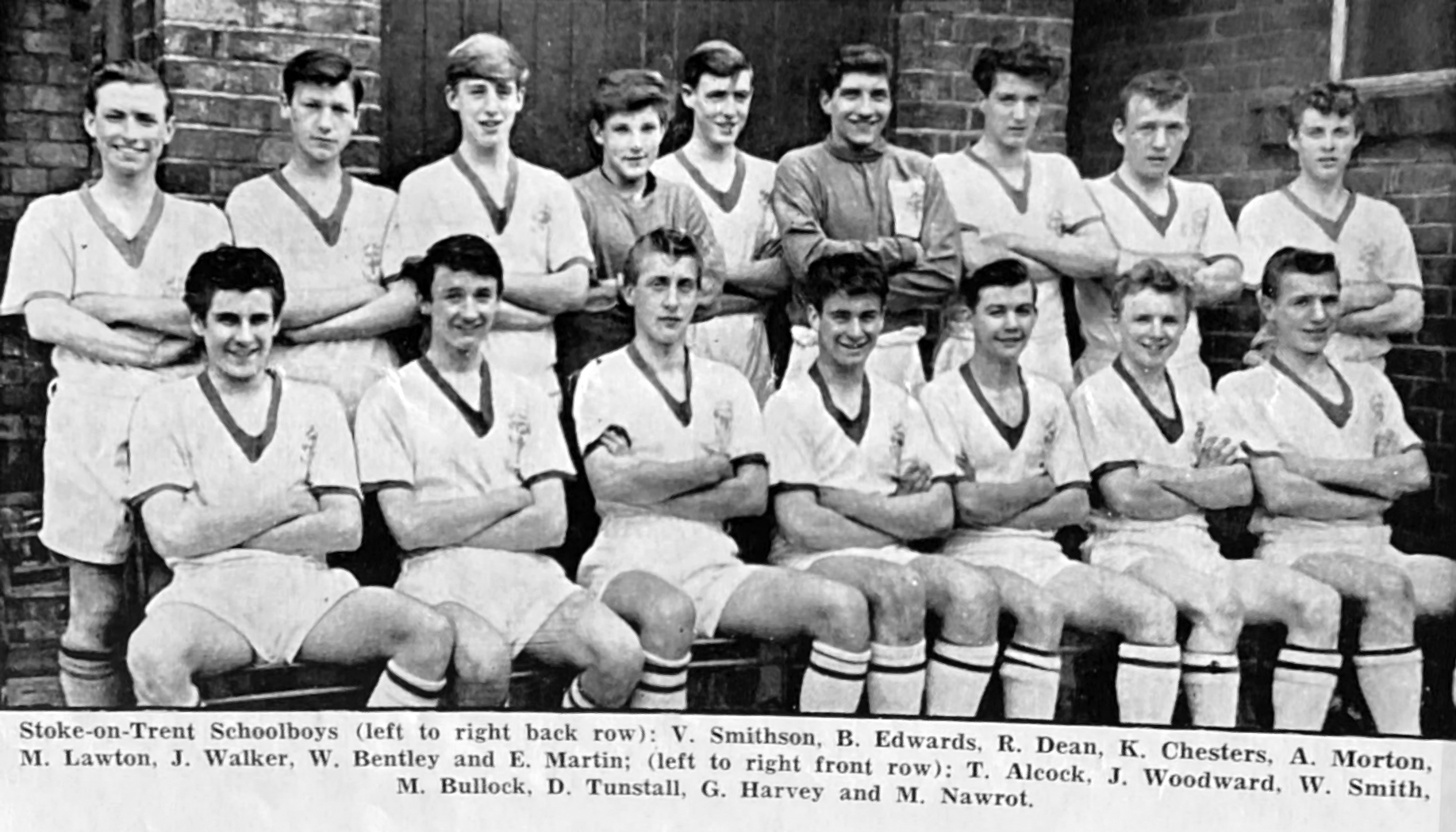
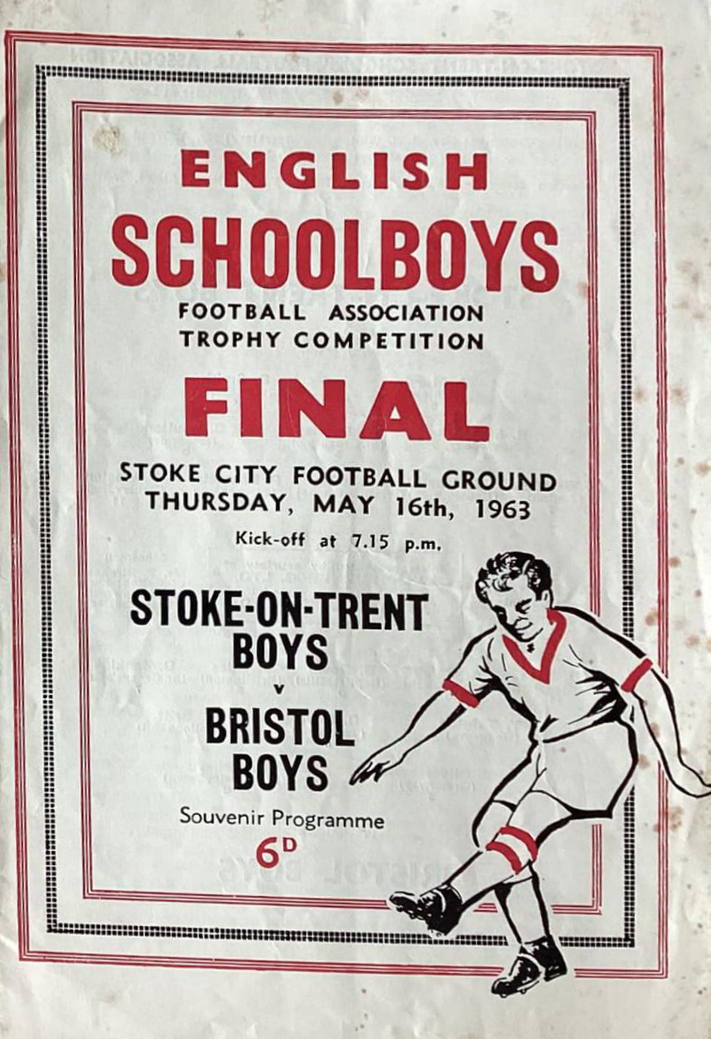
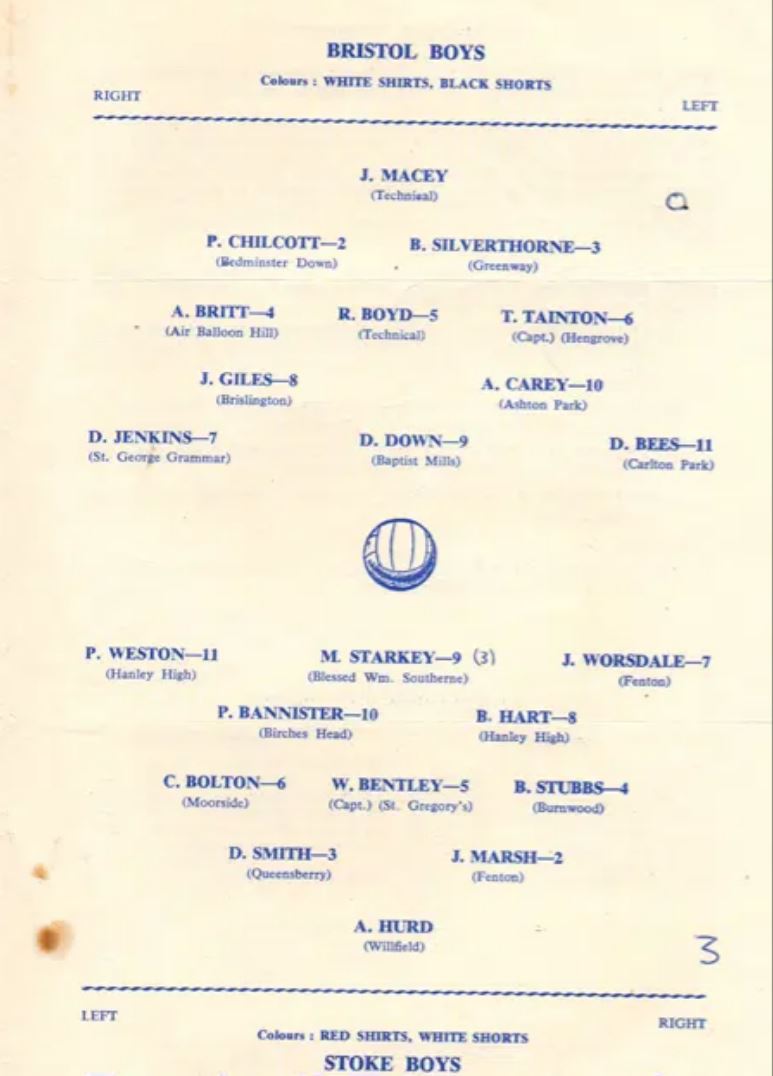
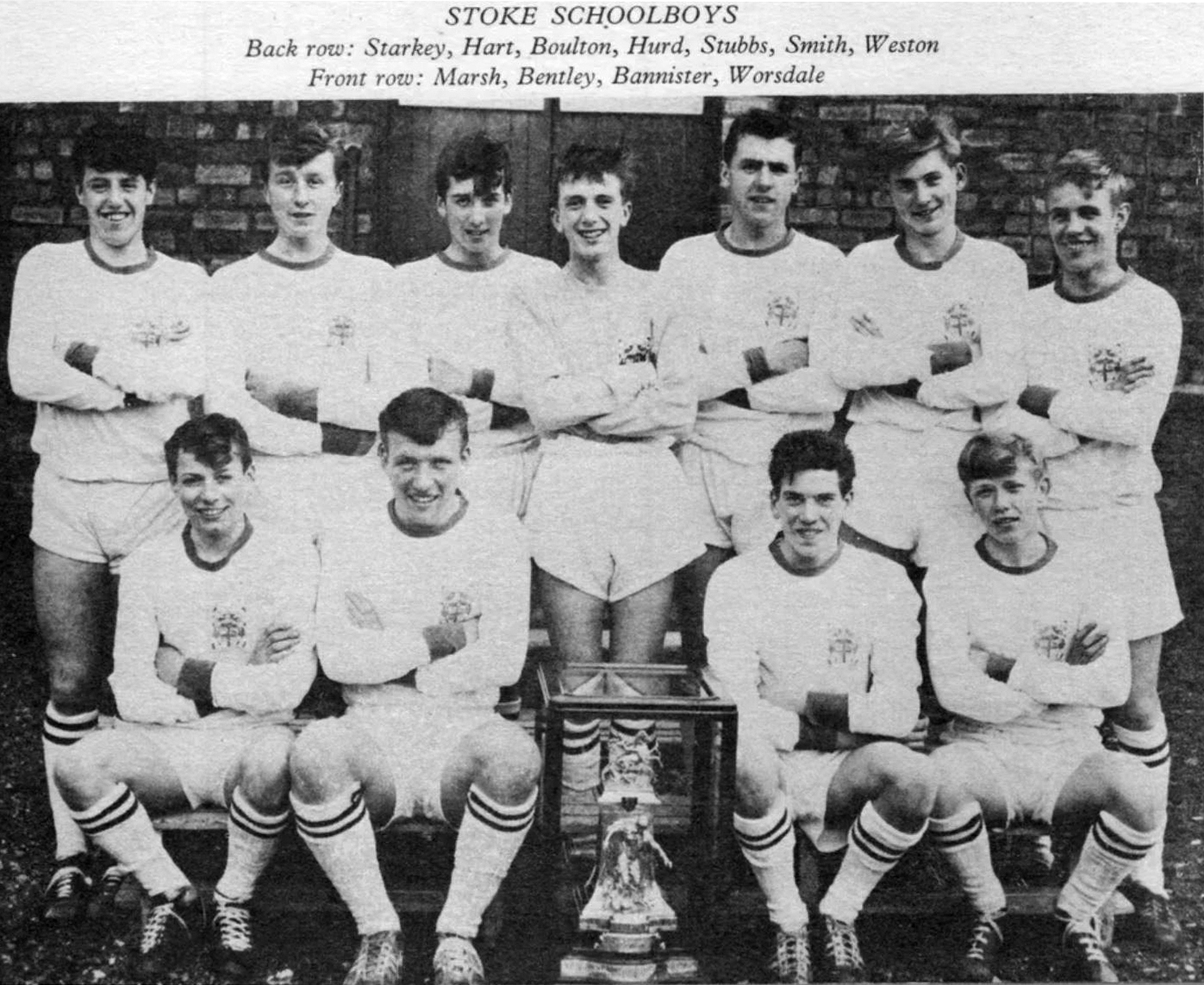
The early sixties were a very successful time for schoolboy football in the Potteries, and both local clubs benefitted from this. Stoke-on-Trent schoolboys beat Liverpool schoolboys 2-1 in 1962 in the final of the English Schoolboys Football Association Trophy over two legs – the first at Vale Park (a 1-0 victory watched by 20,000) on the 3rd May followed by the second leg at Anfield four days later, a 1-1 draw watched by 22,000.
They retained the title the following year beating Bristol schoolboys 5-1 over two legs at Bristol Rover’s Eastville Stadium and the Victoria Ground. Stoke schoolboys won the first leg away 3-0 thanks to a hat-trick scored by centre forward D Starkey. They followed this with a 2-1 victory at home. The Vale recruited Clinton Boulton, Terry Alcock and Paul Bannister from those teams and Stoke City recruited John Woodward (who later joined the Vale), Bill Bentley, Jackie Marsh, Denis Smith and John Worsdale. Mickey Bullock was signed by Birmingham City and also had a long career as a professional footballer.
Read all the episodes
- 75 years a Vale fan: part one of Stuart Dean’s Port Vale memoirs
- 75 years a Vale fan: part two of Stuart Dean’s Port Vale memoirs
- 75 years a Vale fan: part three of Stuart Dean’s Port Vale memoirs
- 75 years a Vale fan: part four of Stuart Dean’s Port Vale memoirs
- 75 years a Vale fan: part five of Stuart Dean’s Port Vale memoirs
Share your thoughts on these memories and post a comment below

Fascinating read. Stuart’s memories go further back than mine, but I do recall seeing Harry Poole scoring his last goal for the club at home to Workington September 1967 in a 4-2 win. Stanley Matthews moved him to centre forward, and Poole scored two that day, the second a delicate lob over the keeper.
More excellent reminiscences, looking forward to part 3.