





The fifth instalment of long-standing Port Vale supporter Stuart Dean’s memoirs of decades supporting the club…
This is part five and covers the start of the John Rudge era.
75 YEARS OF SUPPORTING THE VALE - PART FIVE

By Stuart Dean
Following the sacking of McGrath in December 1983, John Rudge was made caretaker manager at Port Vale. Under McGrath, the club had lost 13 of their opening 17 league games. The club had the third highest budget in the division, a weekly wage bill of three times that of the home gate receipts and were rooted to the foot of the table, nine points from their nearest competitors.
Rudge stated that “we cannot change things overnight” and signed left-sided midfielder Kevin Young on loan, and switched Eamonn O’Keefe from midfield to the attack. Rudge lost his first two games in charge, but the team went on to win 21 points from 15 games, and he was given the job permanently on 9 March 1984 with a salary of £11,000-a-year.
He was unable to prevent relegation, but the club did avoid finishing in last place. Though Mark Bright and Robbie Earle were signed by the Vale before Rudge’s appointment, he helped to bed them into the first team, making use of the many hours he had previously spent providing them with extra training sessions as a coach. Bright, though, refused to sign a new contract with the club and joined Leicester City for a tribunal set figure of £66,666.
The 1984–85 campaign aimed to arrest the decline and consolidate in mid-table. Rudge achieved this aim, slashing the wage bill to offset the club’s reduced income, guiding the Vale to a 12th-place finish. He had sold big striker Jim Steel for £10,000 in January 1984 and received a £17,500 fee for Eamonn O’Keefe in March 1985, which gave him money to invest in the playing squad. His first transfer signing was winger Oshor Williams for £7,000 from Stockport County, who would become a key player after recovering from a cracked kneecap sustained soon after signing.
Two stand-out free transfer signings were full-back Alan Webb and attacker Alistair Brown. Webb went on to win the Port Vale Player of the Year award in 1985, whilst the veteran Brown proved to be an excellent partner to young Earle. In summer 1985, Rudge bought experienced centre-half John Williams from Tranmere Rovers for £12,000, whilst young striker Andy Jones was purchased for £3,000. Williams was sold on for a £18,000 profit within 18 months, whilst Jones would score 53 goals in his first two seasons at Vale Park.
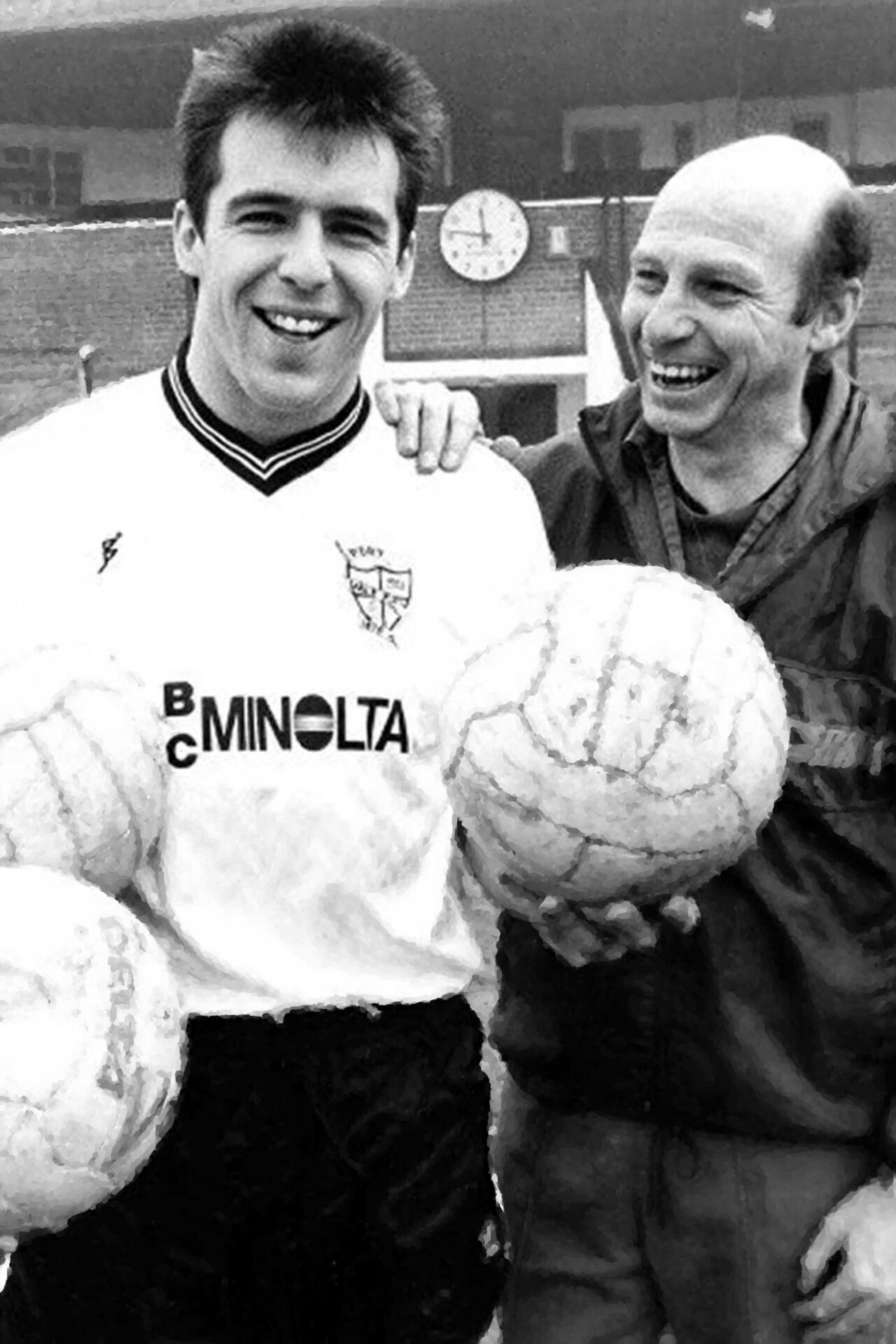
Andy Jones & John Rudge
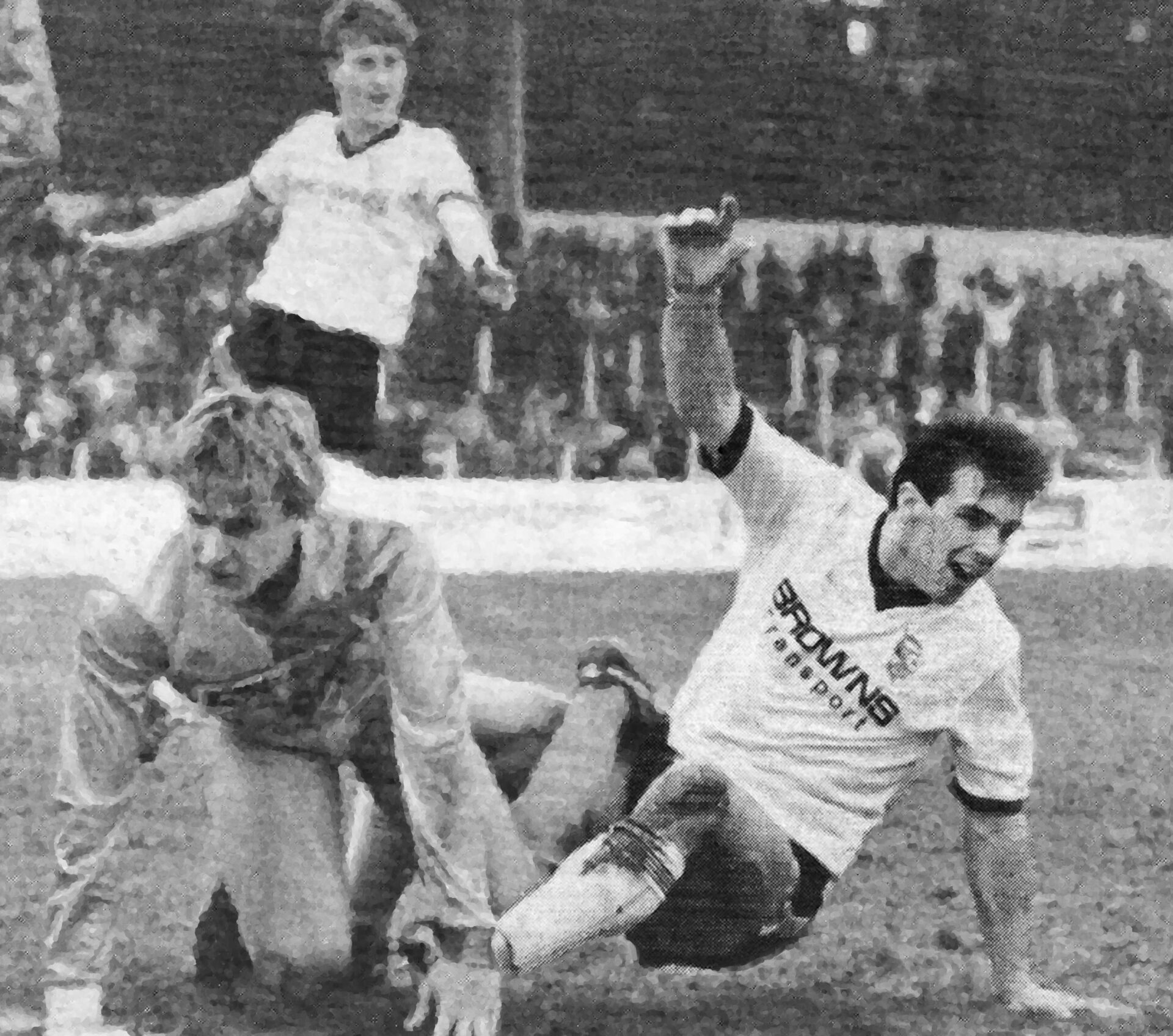
Andy Jones in action
Andy Jones played for Rhyl before being bought by Vale manager John Rudge in May 1985. He quickly became a regular in the squad and was the Vale’s top-scorer in 1985-86 with eighteen goals, his strike partnership with Robbie Earle helping the club win promotion to the third tier. He enhanced his growing reputation in the 1986-87 season, again as top marksman, with 37 goals (a post-war club record); his 27 league goals making him the most prolific scorer outside of the top flight. Andy scored twelve of his goals from the penalty spot, missing just three in the campaign.
Throughout his career at Vale he scored 20 of his 23 penalties in competitive games – an all-time club record. He also scored a brace eight times, bagged a hat-trick against Fulham at Craven Cottage and hit five past Newport County at Vale Park. His prolific goal scoring exploits made him an obvious winner of the Player of the Season award.
After scoring 6 goals in the first 8 games of the 1987-88 season he was sold to Charlton Athletic for a then club record fee of £350,000. He played 6 times for Wales scoring 1 goal. Andy was probably Rudge’s most important signing as his sale provided the funds for him to exercise his outstanding skills in the transfer market.
An 18-game unbeaten run from January to April 1986 helped to secure Vale the fourth promotion place at the end of the 1985–86 season, leaving them seven points clear of fifth-place Leyton Orient. In addition to 18 goals from Jones, the team had a solid defence, and their tally of 19 clean sheets was beaten by only one other club in the entire Football League.
At the end of the season, Rudge turned down the opportunity to become manager of Preston North End. Major signings for the start of the 1986–87 season were goalkeeper Mark Grew and central midfielder Ray Walker, both of whom featured heavily for the club in the coming years, as well as winger Paul Smith.
A tribunal set the fee for Walker from Aston Villa at £12,000, much to Villa chairman Doug Ellis’s fury. However, the attached 50% sell-on clause dissuaded any motivation to sell him on, meaning that he would end up staying for 11 years and making 424 appearances for the club. Ray Walker had been loaned by Aston Villa to Port Vale for two months at the start of the 1984–85 season. He played 15 games for John Rudge’s side that season, scoring his first goal in professional football on 15 September in a 3–1 win over Torquay United at Plainmoor. He returned to Villa Park but failed to establish himself in the first-team.
He returned to Port Vale (now in the Third Division) permanently in July 1986 for a fee of £12,000, plus 50% of any future sale above that amount (a fee settled by a tribunal). Aston Villa had demanded £25,000, whilst Port Vale could only afford to go to a maximum of £20,000. He played 54 games in 1986–87, scoring five goals. He was voted Player of the Year by the club’s supporters in 1987–88, and was also selected by the PFA for the Third Division Team of the Year.
These awards were handed to him for his performances during his 53-game season, with one of his seven goals coming from a long-range effort against Tottenham Hotspur in a celebrated FA Cup fourth round upset. He handed in a transfer request in June 1988, following rumours that the club had turned down an offer of £150,000 from Manchester City; but his request was rejected.
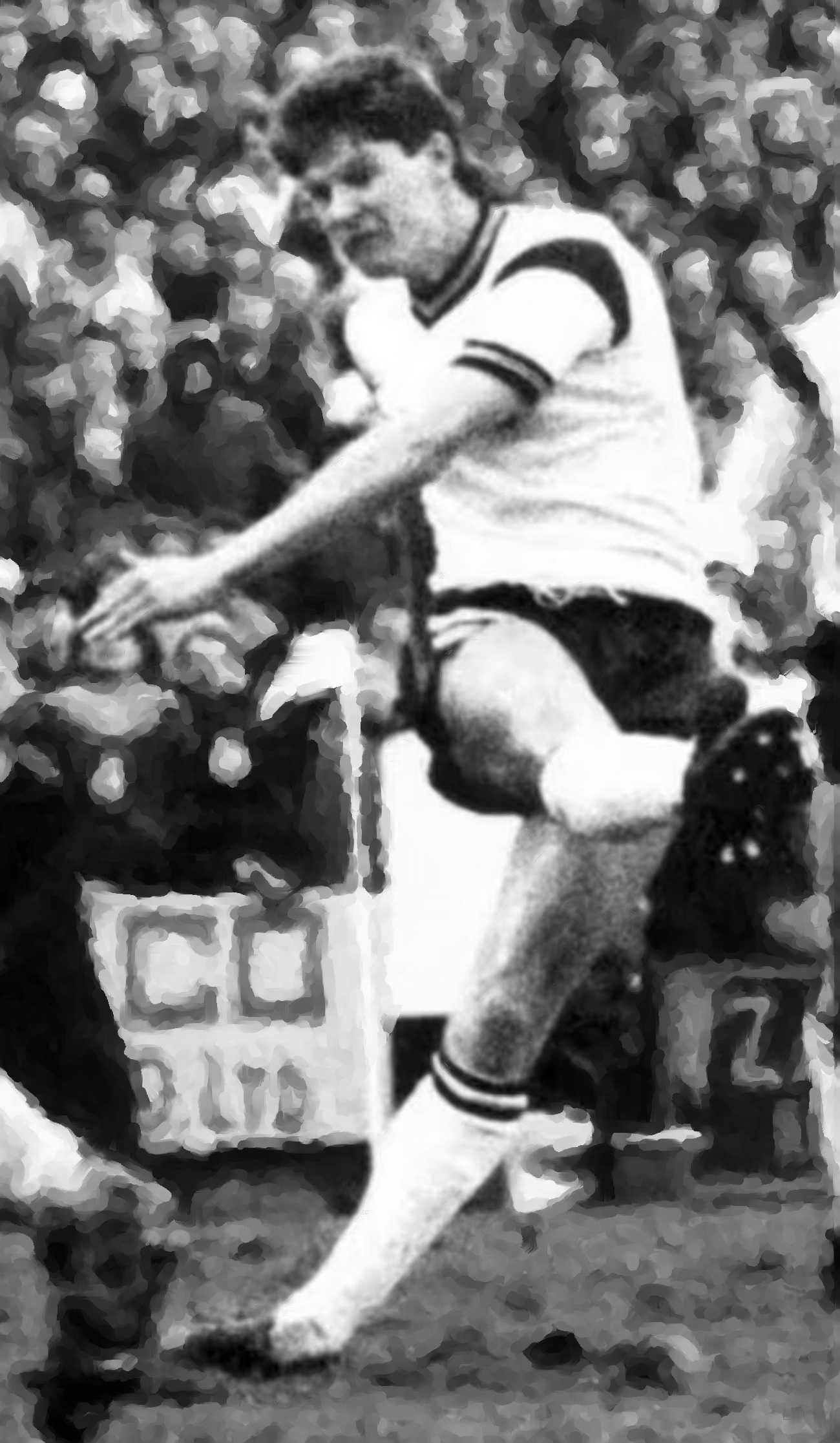
Ray Walker
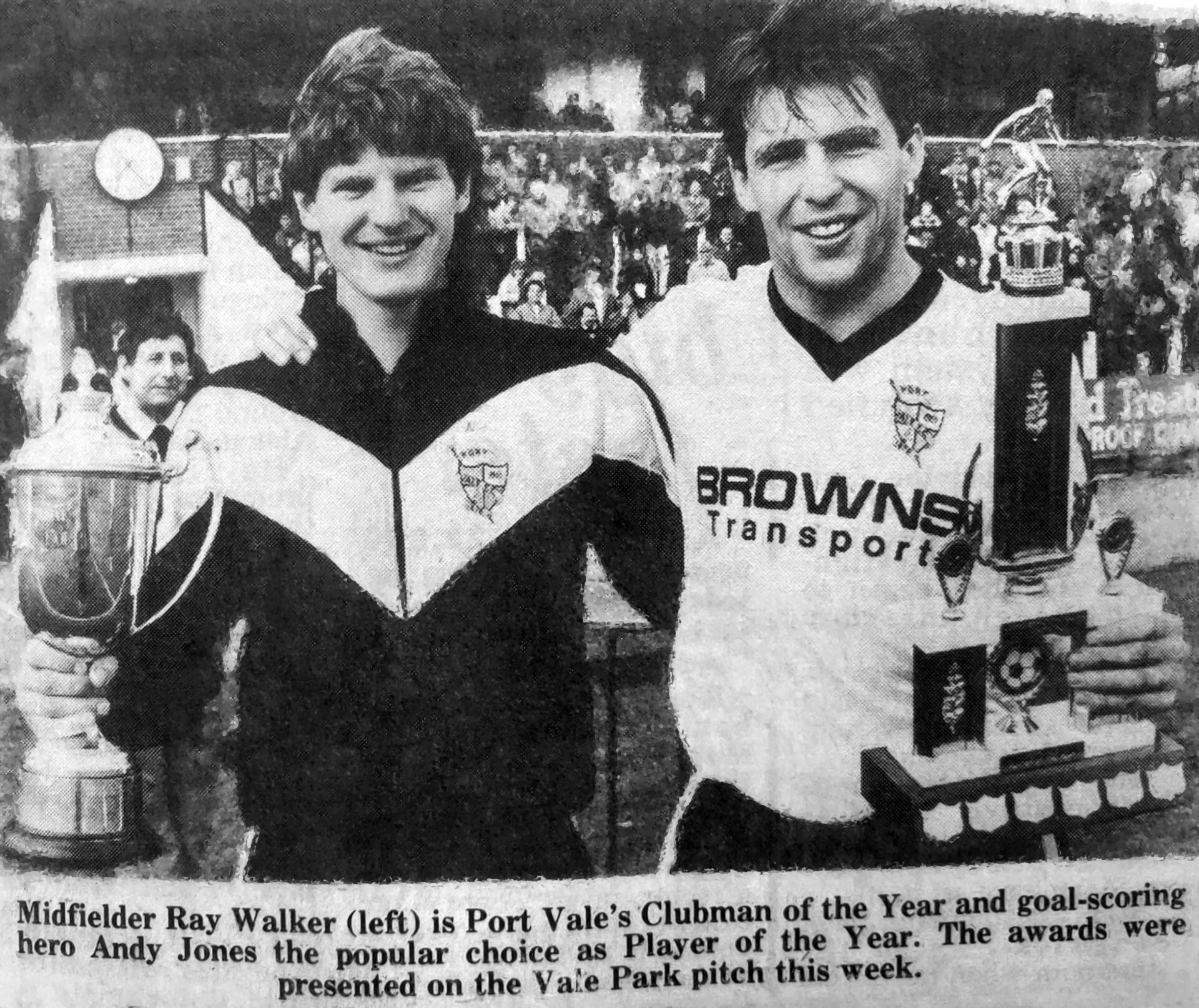
Rudge claimed that Walker and Robbie Earle had one of the best-ever midfield partnerships at the Vale and I can’t help but agree. The pair helped the club win promotion in 1988–89, both men being key players in the 1989 play-off final. Walker was also selected in the PFA Team of the Year for a second successive season, scoring six goals in 56 appearances. Despite this, he said, “Wait until next year. I had a bad season!”
He helped the club to survive and prosper in the Second Division, and recovered from injury to post 47 appearances in 1989–90. He only scored one goal, though it came at a crucial time, helping the “Valiants” to record a 3–2 victory over top-flight Derby County at Pride Park in the FA Cup. He was installed as the club’s penalty-taker in 1990–91, and five of his seven goals came from the spot. His performances over his fifty games resulted in him being awarded the club’s Player of the Year award once again in 1991, with only David Harris before him having been handed that honour twice.
He was sidelined for five months with ligament damage in September 1991, and his absence during the 1991–92 was notable and was a factor in the club being relegated, with Vale finishing five points from safety. He recovered to make 27 appearances throughout the season, his two goals coming from the spot. Walker was involved in the TNT Tournament win in the summer of 1992. He picked up a knee injury in April 1993 and although his performances during 1992–93 saw him selected for that season’s PFA Second Division side of the year, he had to undergo a cruciate ligament operation in September 1993, which caused him to miss most of the 1993–94 season. At the end of the campaign, though, Vale were promoted into the First Division (now the second tier) as Second Division runners-up.
He spent a brief five-game loan period with Second Division Cambridge United in September 1994 but managed to win his place back at Vale Park upon his return. However, he was struck down by another knee injury in March 1995.
At that point, Ian Bogie was signed as his replacement. Walker scored two goals in 47 games in the 1995–96 season, both goals coming in a 4–3 win over Crystal Palace in an FA Cup third round replay. He played in the 1996 Anglo-Italian Cup final, as Vale lost 5–2 to Genoa. He made 19 appearances in 1996–97, as Vale posted their highest ever post-WW2 finish (eighth place in the second tier). He then left the club in May 1997.
His many years with the “Valiants” entitled him to a testimonial game, which finished as an 8–6 defeat to Leicester City. Known by the nickname ‘Razor’, he played a total of 440 league and cup games for the club.
Just before the start of the 1986/87 season Paul Smith was purchased for £10,000 from Sheffield United and was sold for four times that figure to Lincoln City just over a year later. The club finished mid-table, twelve points above the relegation zone, whilst Jones scored 37 goals. The winter signing of veteran Bob Hazell helped to shore up Vale’s defence as he formed an excellent partnership with Phil Sproson.
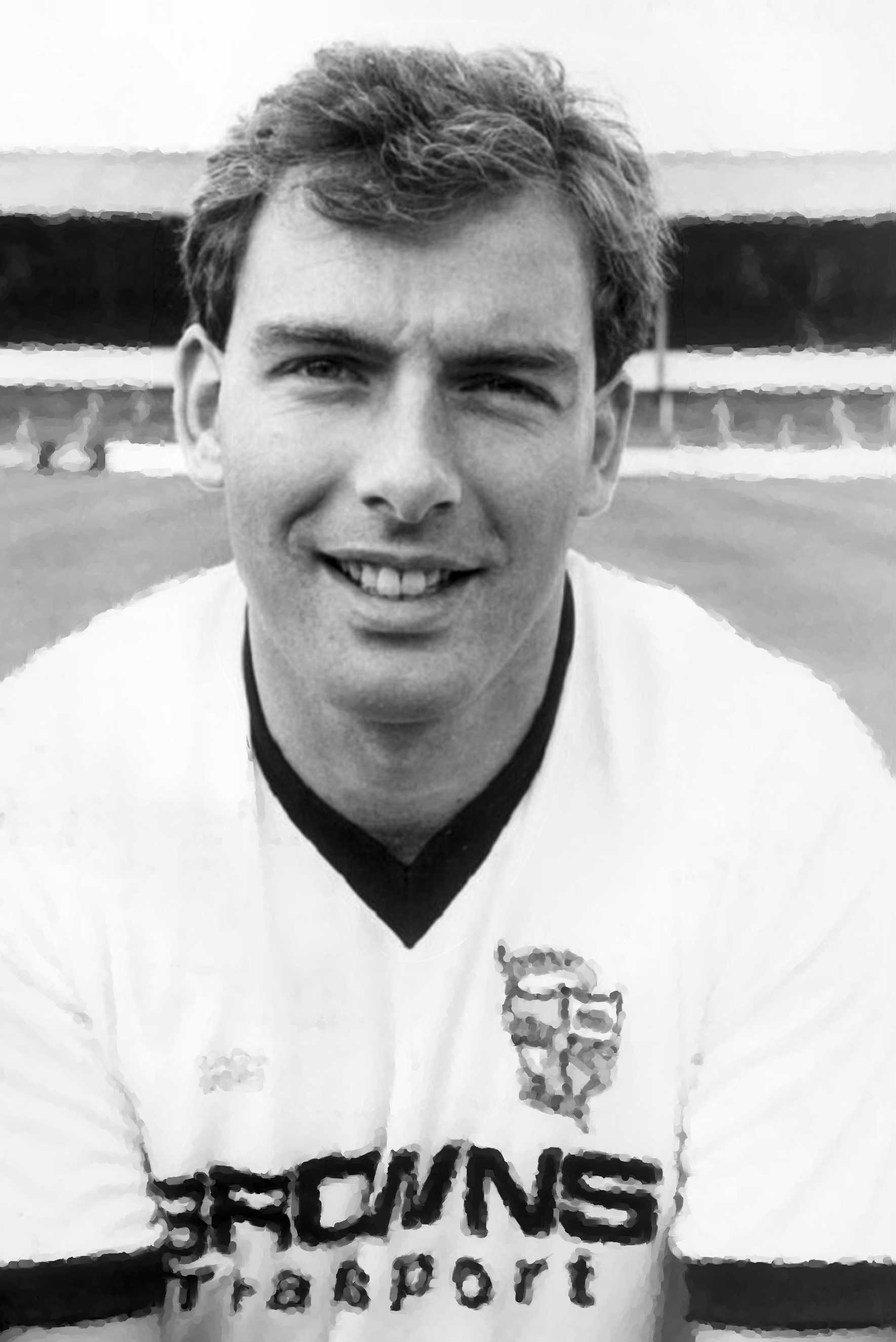
Phil Sproson was spotted by Port Vale coach Reg Berks after he visited Thistley Hough High School to see the team play. After asking for the youngster’s address, he visited him later in the day to get him on a contract, at which point he discovered the youngster was the nephew of Vale’s manager, Roy Sproson. In the Vale youth team, Sproson was a midfielder, though as he grew into a tall young man he was converted into a centre-half. He rejected an apprenticeship at Stoke City. Instead, he became an apprentice electrician until new manager Bobby Smith offered him forms with Port Vale in December 1977.
He featured in two Third Division games towards the end of the 1977–78 season. With the “Valiants” relegated into the Fourth Division, Sproson found first-team chances easier to come by at Vale Park as he played 25 games in the 1978–79 season under the stewardship of Dennis Butler. He scored his first senior goal on 15 September 1979, in a 5–0 home win over Northampton Town. He established himself in the first-team under new boss John McGrath, and played 40 games in the 1979–80 season. He went on to feature 50 times in the 1980–81 campaign and missed just three games all season, although he was sent off for swearing at teammate Russell Bromage during a 5–1 defeat at Northampton Town. He scored five goals in 51 games in the 1981–82 season, after missing just four league matches.
The 1982–83 season proved highly successful for Sproson; he was a regular in the first-team, claiming four goals in 45 games, and was included in the PFA select Fourth Division side as Vale were promoted in third place. Vale boasted the best defensive record in the Football League, conceding only 34 goals. Stoke City manager Richie Barker had tried to sign Sproson earlier in the season but was put off by Vale’s high asking price. The club suffered relegation in 1983–84, with Sproson scoring four goals in 44 appearances.
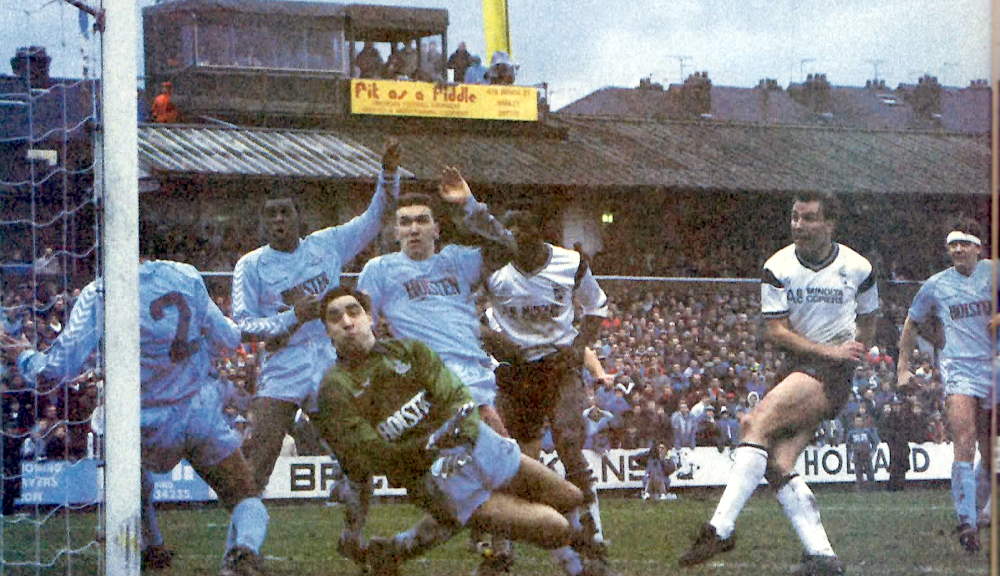
Sproson maintained his first-team place in the 1984–85 campaign under the management of John Rudge, as he played 54 of Vale’s 56 games. In the 1985–86 season, Sproson was appointed as club captain, and missed just two games as Port Vale were again promoted out of the Fourth Division; he was again selected in the PFA Team of the Year. He scored four goals in 52 appearances in the 1986–87 season as the only real constant presence in the Vale defence. He missed just four of Vale’s 56 games in the 1987–88 season, and scored the winning goal in the FA Cup giant-killing of First Division side Tottenham Hotspur after getting the better of goalkeeper Tony Parks and centre-back Neil Ruddock in a goalmouth scramble. Sproson later claimed he also made the best tackle of his career in the game when he lunged in front of Clive Allen to block a Mitchell Thomas cross.
The 1988–89 season saw Vale promoted from the Third Division; Sproson scored five goals in 29 games. He signed a new 12-month contract in December 1988 and stated that his ambition was “to see Port Vale established as the No. 1 club in the Potteries”. In January 1989, Sproson suffered a severe knee injury during training and retired the following month. His testimonial match was held against rivals Stoke City on 21 March 1988, Vale drew the game 1–1, and Sproson collected £12,000 of the takings.
Against medical advice, Sproson attempted a return to league football. In August 1989 he joined Dave Mackay’s Birmingham City, who were obliged to pay Port Vale a “fee” of £50,000 in lieu of insurance money. He played 12 Third Division and four League Cup games for the “Blues” in the 1989–90 season, but a re-occurrence of his knee injury meant he was unable to perform at the required fitness levels, and he retired again in September 1990.
Phil Sproson
Phil Sproson scores against Spurs
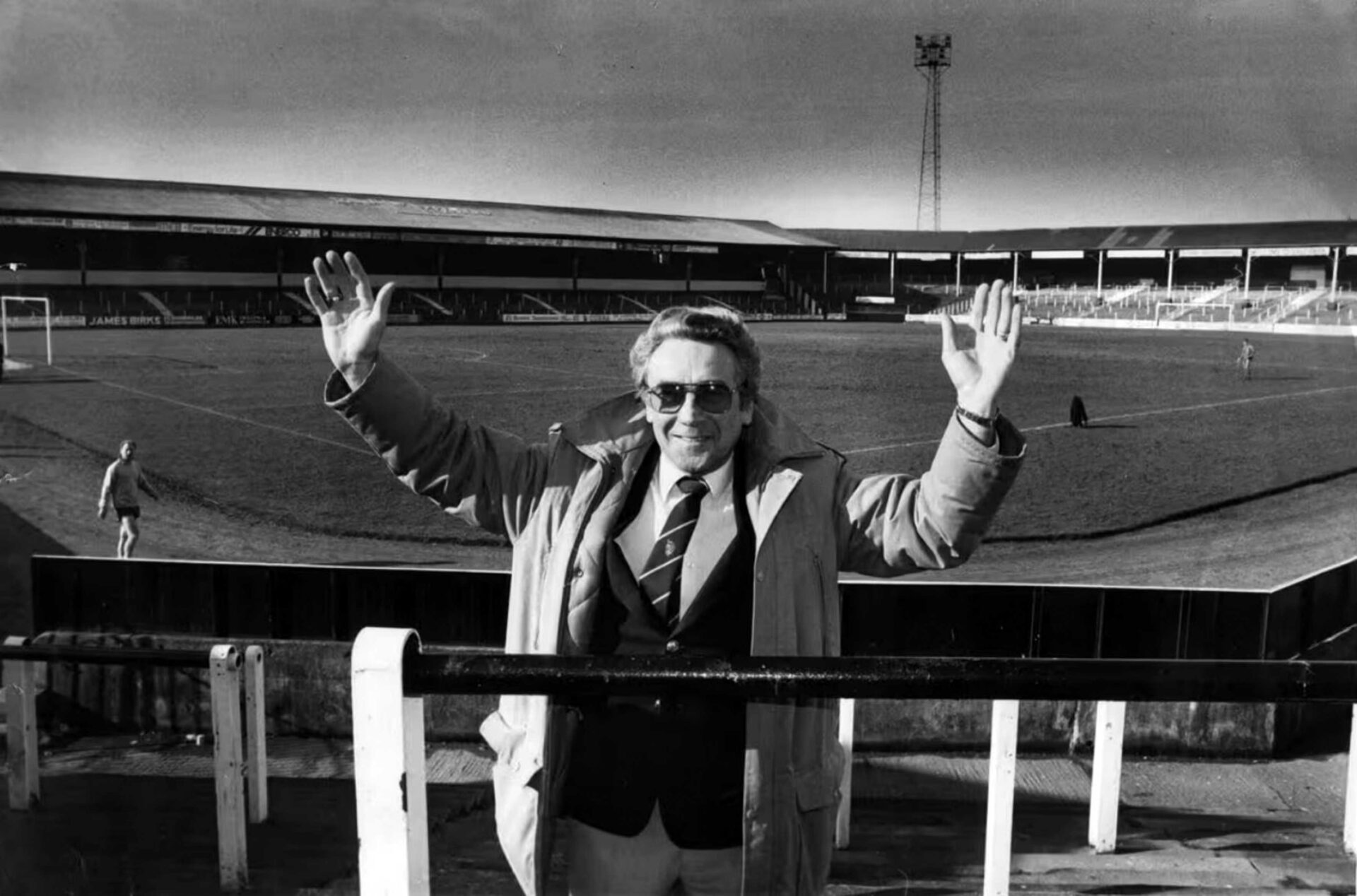
At the end of the 1986/87 season, Bill Bell had been made the club’s chairman. He had a tempestuous but ultimately successful relationship with Rudge – though Rudge usually had to work hard to persuade Bell to agree to invest in a new signing, whilst Bell would change the coaching staff on his own volition. Darren Beckford was signed from Manchester City for £15,000, with half of the funds coming from bucket collections from supporters. He would become the club’s top scorer for the next four seasons. Rudge also gave a first-team debut to youth academy product Andy Porter, who would make over 400 appearances over the next 12 years.
Bill Bell
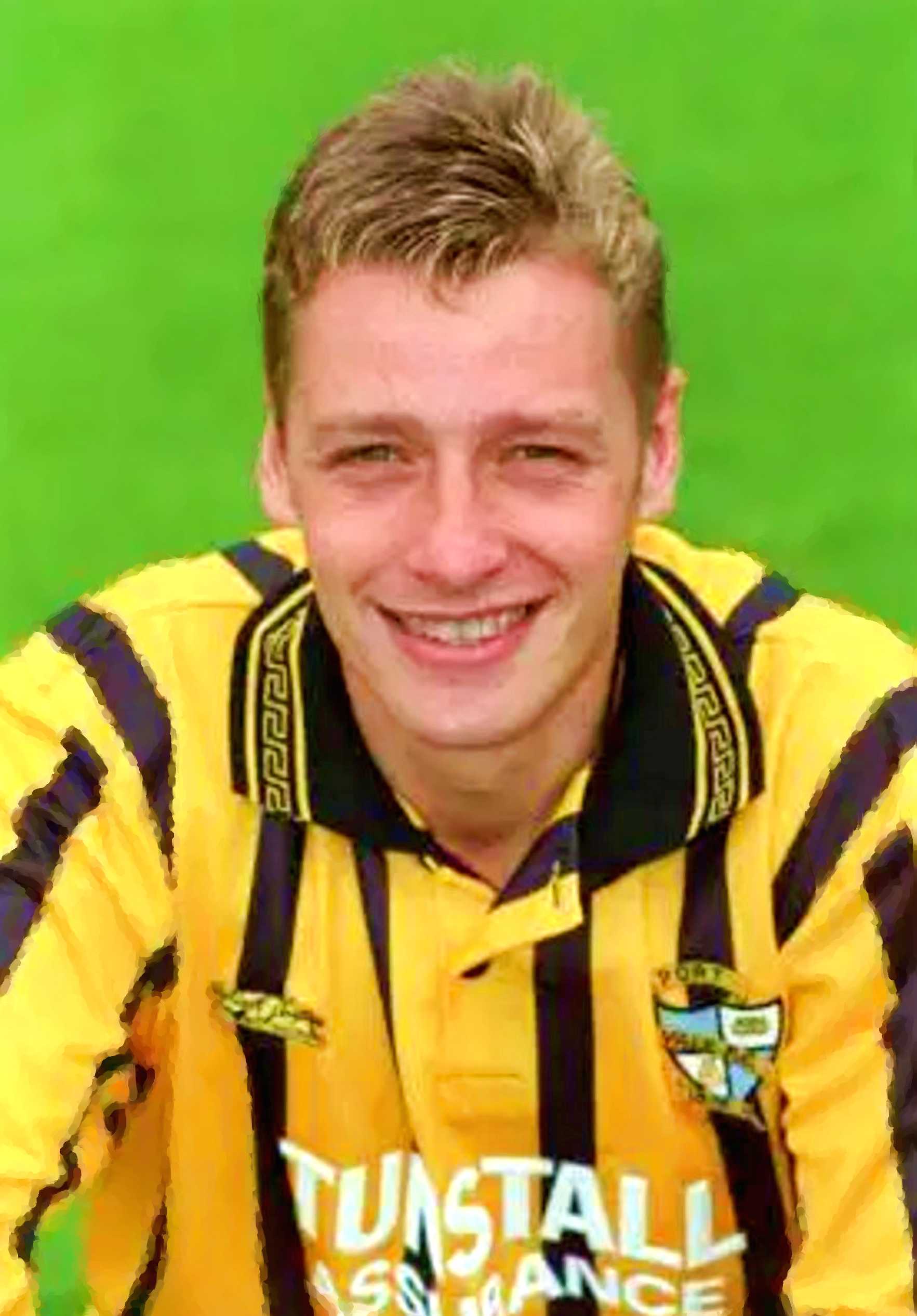
Andy Porter
Born in Holmes Chapel, Porter joined Port Vale as a youngster after being released by Manchester City. He signed a professional contract with Vale on 29 June 1987. He was named the club’s Young Player of the Year in both the 1988–89 and 1989–90 seasons. He went on to have a long association with the Vale, with OneValeFan describing how he “gave passion, power and energy to a Vale side and as a result he was often moved around the midfield”.
On 24 November 1992, he scored in a 3–1 win over Potteries derby rivals Stoke City in an FA Cup first round replay. He played in the 1993 Football League Trophy final, a 2–1 victory over Stockport County at Wembley Stadium. His spell with Vale coincided with one of the most successful the club had enjoyed for many years, including FA Cup giant-killing acts and twice winning promotion to the second tier of English football.
He captained the club in the 1996 Anglo-Italian Cup final, as Vale lost 5–2 to Genoa at Wembley and enjoyed a testimonial match against Derby County in the same year. His 431 appearances in all competitions means he has the fifth most appearances of any Vale player over all competitions. He was affectionately known as “Goober”.
In 1987–88, Vale finished comfortably in mid-table after Rudge switched to a 4–3–3 formation that better suited the players available to him. The cash-flow problem was eased by the sale of Andy Jones to Charlton Athletic for £350,000. Rudge spent £35,000 for Simon Mills (shirt off in photo celebrating victory over Bristol Rovers in the play-off final) from York City, who would be a firm fixture in the first-team for the next five seasons. Unable to fit him into the side due to the form of Ray Walker and others, Rudge converted Mills from a midfielder to a right-back.
He made 19 Third Division appearances in 1987–88, scoring five goals, including one in a 3–2 comeback win over former club York. He played 55 games in the 1988–89 promotion season, playing in partnership with fellow centre-backs Phil Sproson and Bob Hazell (who both struggled with injuries) and later Gary West and Dean Glover (who were signed mid-season), alongside full-backs Alan Webb and Darren Hughes, in front of goalkeeper Mark Grew.
This proved to be the most successful defence in the division, conceding just 48 goals in 46 league games. However, a third-place finish meant that they had to overcome Bristol Rovers 2–1 over two legs in the play-off final, with Robbie Earle hitting both goals. Mills missed just one Second Division game in 1989–90, forming a formidable defensive partnership with Hughes. He played 45 games in 1990–91, as Vale retained their second-tier status. He played 40 games in the 1991–92 relegation season, scoring twice, and helped the club to win the TNT Tournament in the summer.
However, in autumn 1992 he developed knee cartilage trouble and underwent a series of unsuccessful operations, limiting him to just three league appearances in 1992–93. He commentated for BBC Radio Stoke at the 1993 Football League Trophy final. He was given a free transfer in May 1994.
Simon was one of those players I always seemed to bump into. I remember travelling to York to see the Vale play. It was a bright sunny day and I was walking from the railway station towards Bootham Crescent when I spotted Simon coming towards me. He informed me that the game had been called off just half an hour before kick-off due to a frozen pitch.
I also remember sitting next to him in the stand at Huddersfield and Sheffield (Bramall Lane). The game in February 1989 against Sheff United I remember in particular, because Gary West made his debut for the Vale. We supporters didn’t know that he had been signed, who he was or that Phil Sproson had suffered a career ending injury. Simon gave us the low down when he joined us in the stand.
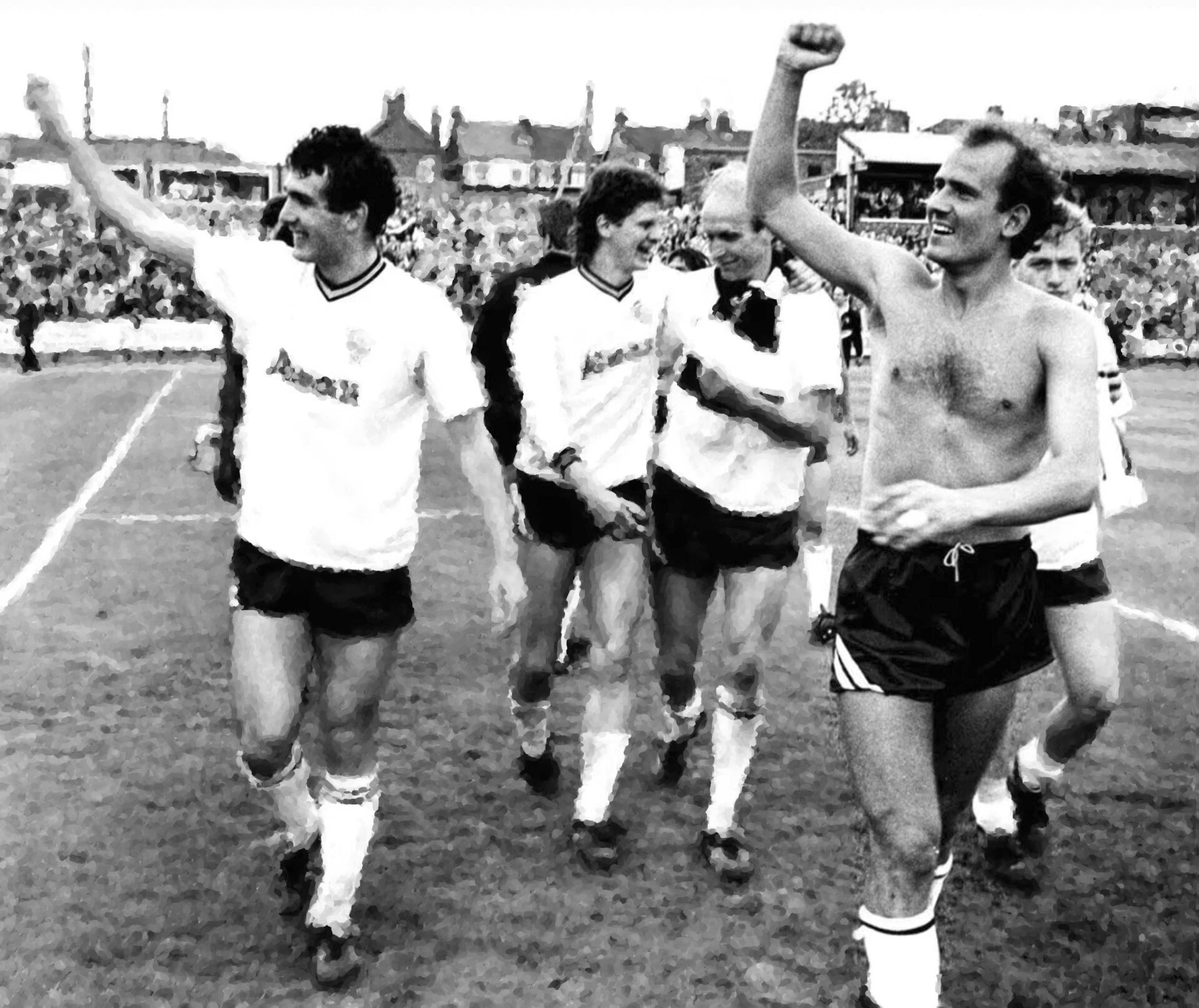
Simon Mills (right) celebrates promotion
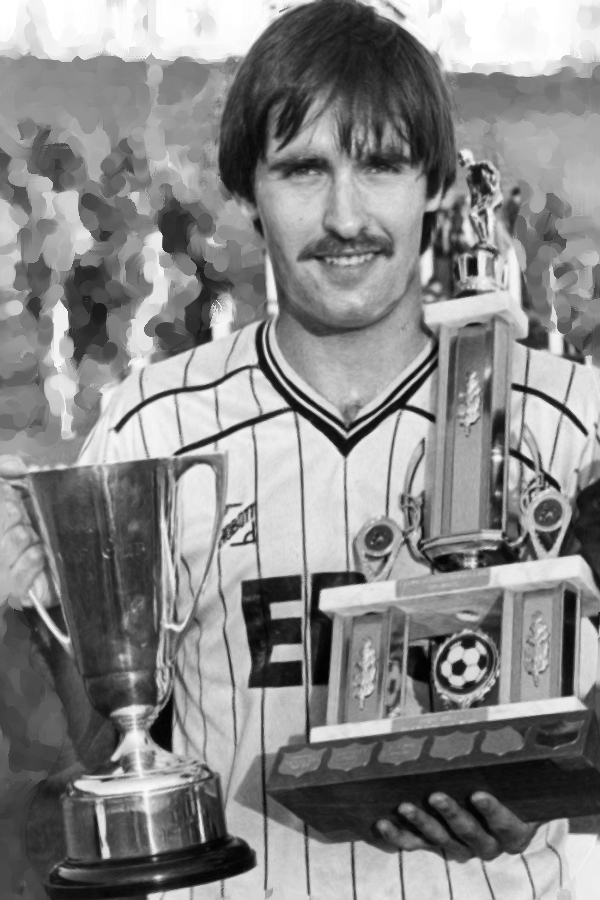
Alan Webb
The Jones money was also invested in midfielder Darren Hughes (£5,000 from Brighton & Hove Albion) and winger Gary Ford (£35,000 from York City via Leicester City). On 20 January 1988, the club achieved a 2–1 victory over top-flight Tottenham Hotspur in the FA Cup which Rudge said “put us on the footballing map”. Before the cup run there were rumours that the directors were considering sacking Rudge due to a poor run of results in the league. The cup run and the sale of Jones helped to put the club in the black financially for the first time in a long time, with the £175,000 prize money helping to sustain an overall profit of £410,000.
The 1988–89 season was highly successful. In the FA Cup, Vale progressed past Northern Premier League Southport with a 2–0 victory at Haig Avenue. The television cameras were disappointed not to find a giant-killing, as the non-League side failed to cause the Vale much trouble. They then overcame Bolton Wanderers 2–1 at Burnden Park, after “Trotters” goalkeeper David Felgate proved unable to deal with crosses into the box. Drawn against second-place First Division side Norwich City at Burslem in the third round, they were beaten 3–1 by the “Canaries” in front of 15,697 fans, despite holding the lead from an Alan Webb goal for most of the match. The introduction of second-half substitute Robert Fleck changed the match, and he and Andy Townsend got the goals for Norwich. Townsend, an Irish international, ran the show from midfield in the second half.
Rudge signed a new two-year contract after Port Vale beat Bristol Rovers in the play-off final following a third-place finish in the league and victory over Preston North End in the semi-final. I remember both legs of the semi-final well. The first leg was at Deepdale and I couldn’t get a ticket – so I went into the away paddock and kept a low profile. Preston had an artificial pitch at the time and I remember the corners being heavily sanded to hold the ball up. The home side’s tactic seemed to be to play the ball over the top and into the corners.
Preston were managed by former Vale manager John McGrath, who first brought John Rudge to the Vale in 1980. Preston went in front through Nigel Jemson in the 16th minute but Vale drew level in the 68th when a John Jeffers cross was flicked on by Darren Beckford and Robbie Earle buried the chance. A fire underneath the away stand, which had a floor of wooden boards, caused panic amongst the Vale fans who spilled onto the pitch (the fire at Bradford’s Valley Parade was still fresh in everyone’s memory) and caused a short delay. Vale were very happy with the draw.
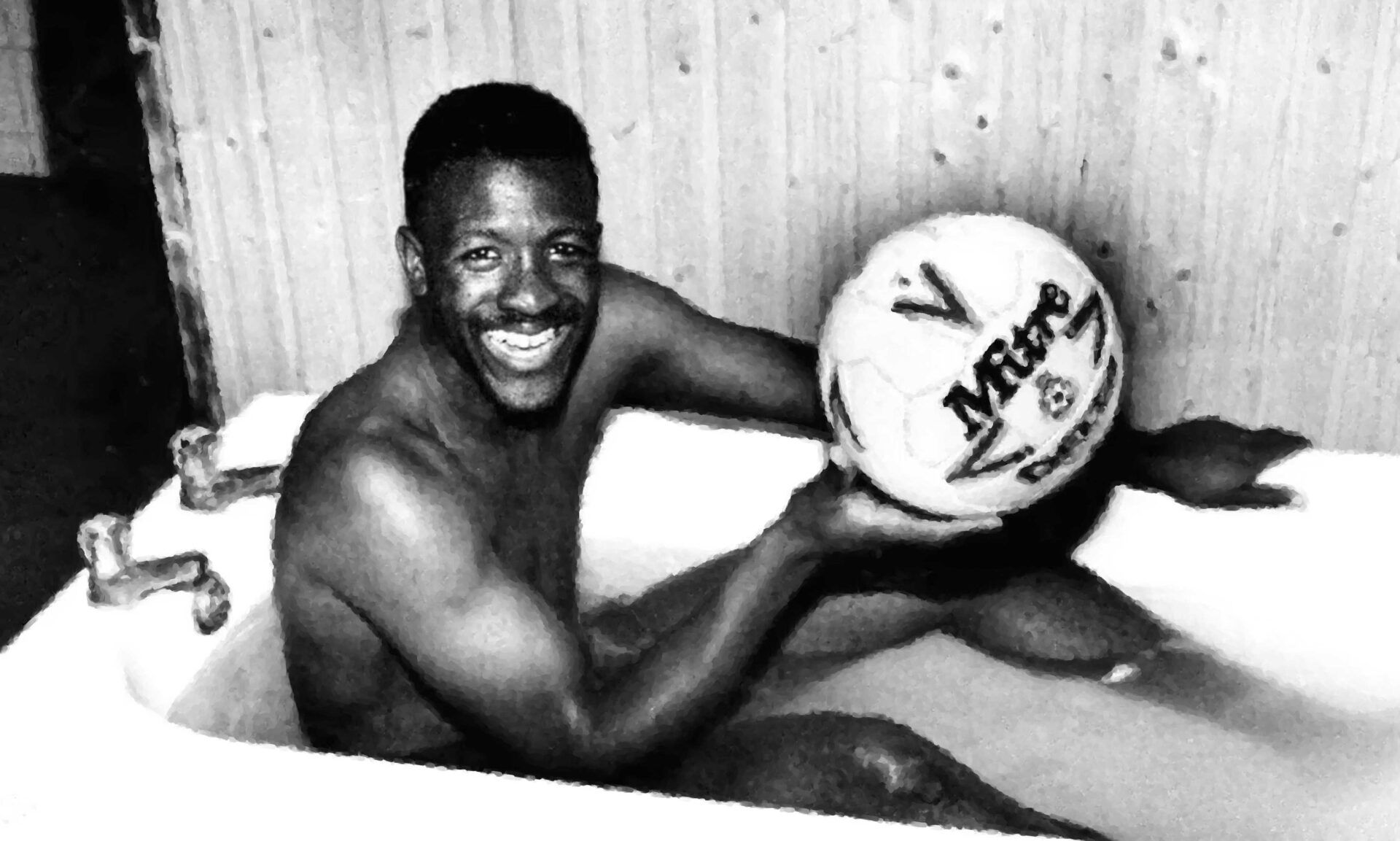
Darren Beckford relaxes after his hat-trick
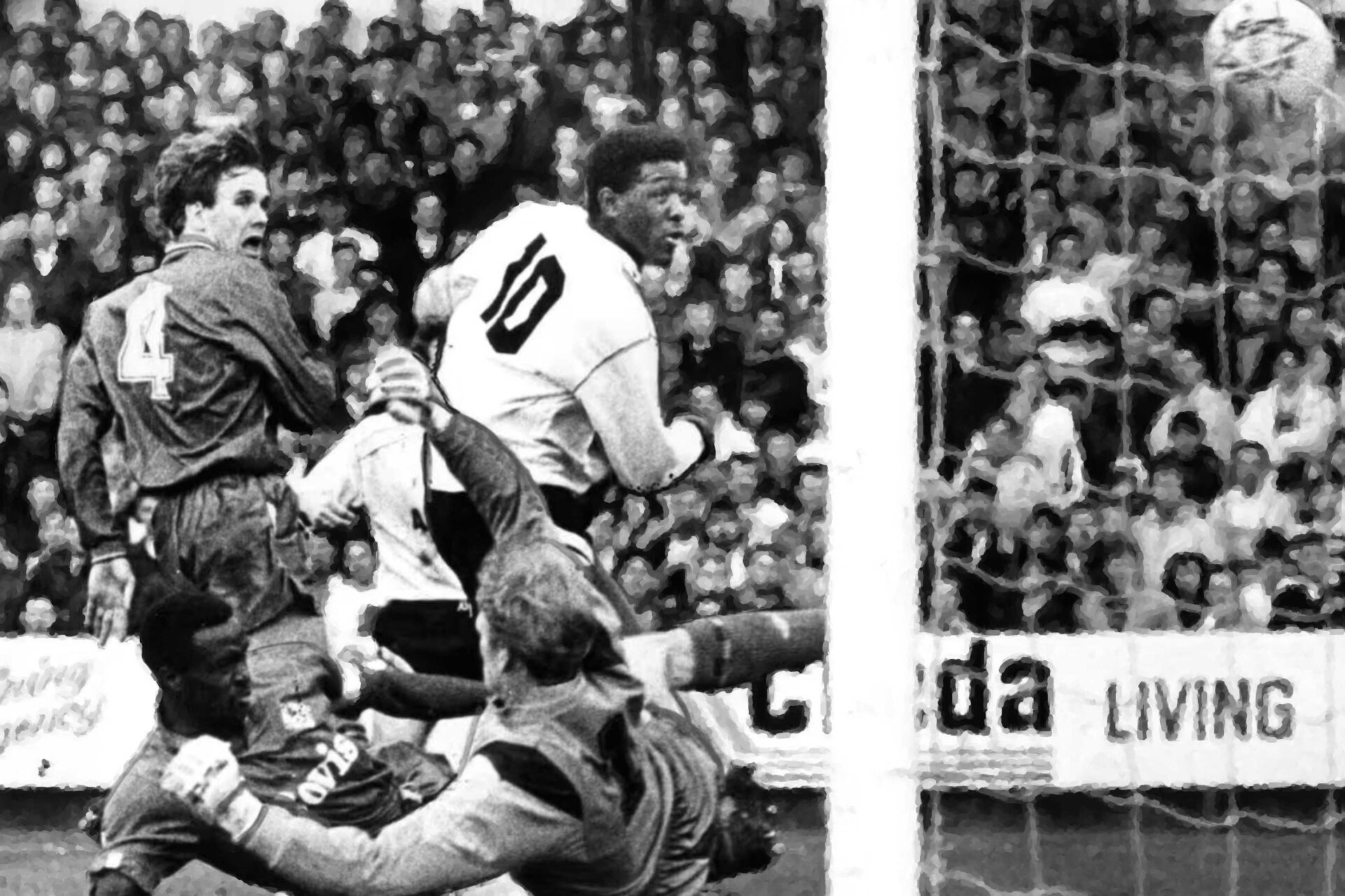
Beckford scores against Preston
Three days later the second leg took place at Vale Park in front of over 13,416. Vale took an 11th minute lead when Beckford slid the ball home after Ron Futcher had headed it on but Mark Patterson equalised two minutes later. Futcher then thumped a penalty against the cross bar but Vale did regain the lead six minutes into the second half. Beckford converted a Jeffers cross and then completed his hat trick in the 75th minute to clinch a 3-1 victory and send Vale through to the final.
It wasn’t a Wembley final, those started the following season, it was a two legged affair against Bristol Rovers. Vale were again away first, having finished highest of the two clubs, and in those days Bristol played their home games at Twerton Park, the home of Bath City which only held 9,000. Vale were allocated 1,500 tickets and on the first day of sale almost 50 camped overnight and the queue was over 400 by the time the ticket office opened and they soon sold out. Popular defender/midfield player Simon Mills had just got married but postponed his honeymoon for the final. The first leg took place on Wednesday 31st May 1989 in front of a packed house. Gary Penrice volleyed Rovers in front in the 31st minute but Vale thought they had equalised two minutes before the break only for Ron Futcher to be flagged offside. Vale dominated the second half and eventually equalised in the 73rd minute when Earle headed home from a Futcher cross. Vale almost won it near the end when Beckford had an effort cleared off the line.
The game that would decide the fate of Vale’s season took place at Vale Park on Saturday 3rd June 1989, the only time that Vale had played a competitive game in June. Over 4,000 came from Bristol to swell the gate to 17,353. Strangely the Bristol press were praising Rovers for getting to the final, but the theme of the article was that they had no chance of winning even though the scores were level and away goals didn’t count. It just showed how well the Vale players were thought of that season to the wider public. As the game got under way Vale dominated the play and only Rovers future England ‘keeper Nigel Martyn stood between a hatful of goals. Glover had a 30 yard shot superbly saved and the ever reliable Beckford and Earle both went close. Vale found the breakthrough seven minutes into the second half through the tried and trusted MBE method which had served them so well. Mills took a corner, Beckford flicked it on and Earle came roaring in to head the ball into the net.
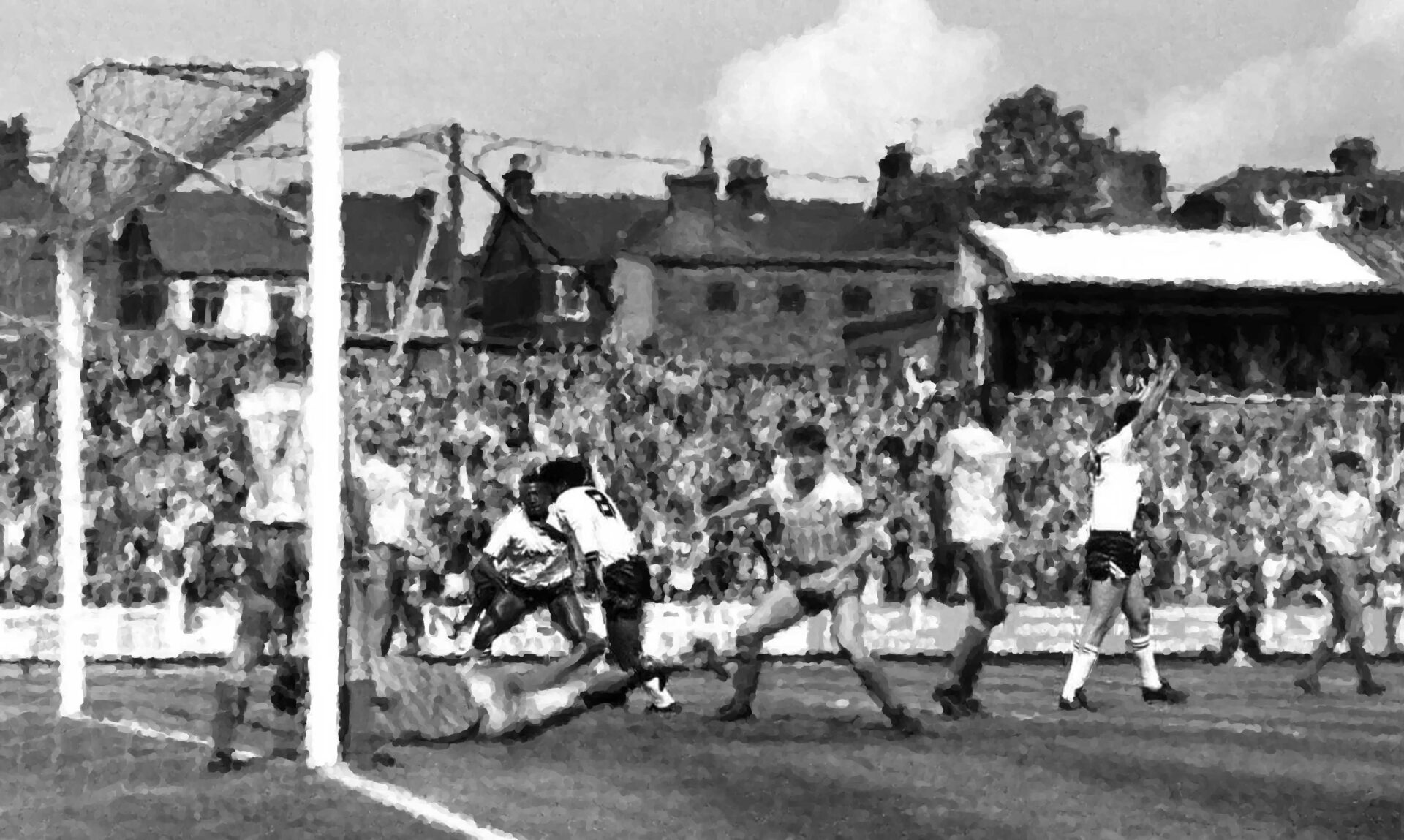
Robbie Earle scores
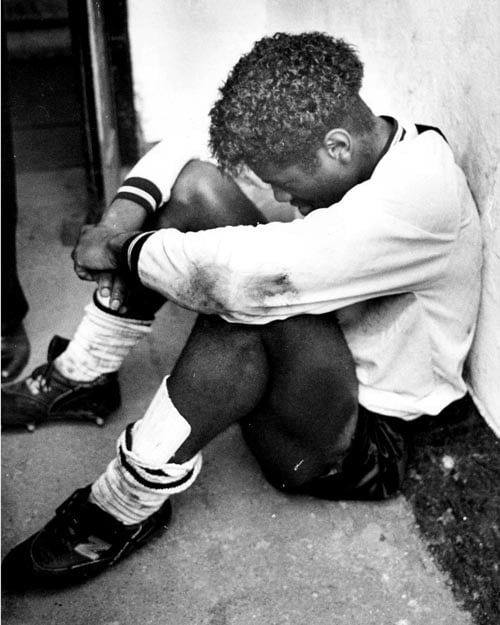
Robbie Earle is overcome after his vital goal
It was Earle’s 19th goal of the season and certainly the most important and also the fourth headed goal he had scored against Rovers in four games that season. They just couldn’t stop him! The crowd roared their approval and kept it up throughout the rest of the game as Vale retained control to hold on to their 1-0 lead and the final whistle was heralded by a huge roar. It was fitting that local hero Robbie Earle scored the winner and it was an iconic photo that saw him slumped in the tunnel afterwards.
Read all the episodes
- 75 years a Vale fan: part one of Stuart Dean’s Port Vale memoirs
- 75 years a Vale fan: part two of Stuart Dean’s Port Vale memoirs
- 75 years a Vale fan: part three of Stuart Dean’s Port Vale memoirs
- 75 years a Vale fan: part four of Stuart Dean’s Port Vale memoirs
- 75 years a Vale fan: part five of Stuart Dean’s Port Vale memoirs
Share your thoughts on these memories and post a comment below
Add your first comment to this post