





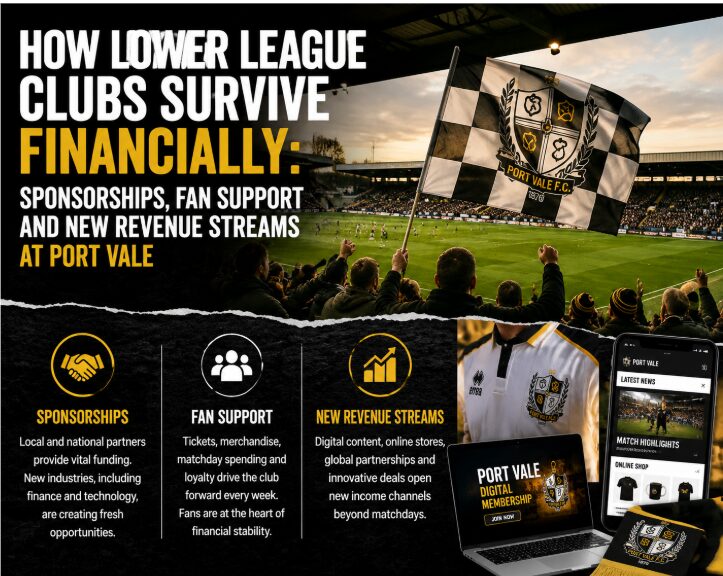
Lower league football runs on tight margins. Port Vale lives inside that reality. The club must stretch limited income across wages, travel, stadium costs, and day-to-day operations. One weak link can break the balance.
This article shows how clubs like Port Vale survive. It focuses on three pillars: sponsorships, fan support, and new revenue streams. Each one works like a beam under pressure. Remove one, and the structure starts to bend.
The Financial Reality Of Lower League Football
Lower league clubs do not benefit from massive TV money or global commercial deals. Their income comes in smaller, steady pieces. Matchday revenue still leads the way. Local sponsors and loyal supporters complete the base.
Costs move faster than income. Player wages, transport, stadium maintenance, and training facilities take constant funding. There is little space for mistakes. A poor cup run or a drop in attendance can change the season quickly.
Port Vale operates in this narrow space. The club must think like a careful operator, not a big corporation. Every decision affects survival first, growth second.
There is always a gap between ambition and budget. Clubs close that gap with creativity, community ties, and flexible commercial deals.
Sponsorship, Commercial Deals And The Search For Stability
Sponsorship sits at the center of lower league finance. It brings outside money into the club and links local identity with business value. Shirt sponsors, stadium partners, and training kit deals all contribute.
Port Vale depends on this structure. Local companies provide stability. Larger partners bring scale. Together they reduce financial pressure across the season.
Modern football has expanded the idea of sponsorship. Clubs now work with partners from outside traditional sport industries. Finance, technology, and digital trading firms all appear in football ecosystems.
Some partnerships reflect this shift clearly. A forex broker shows how financial services can connect with sport through global markets, digital infrastructure, and brand visibility. These relationships highlight a wider trend. Football is no longer only a local product. It is part of a global attention market.
- Shirt sponsorships that fund core operating costs
• Stadium naming and advertising rights that create steady income
• Training kit and academy partnerships that support long term development
• Local business deals that keep community ties strong
• International financial partnerships that bring external capital into the club
Each layer adds support. None works alone. Together they build a flexible commercial base that helps clubs stay stable under pressure.
Fan Support As The Financial Core
Fan support is not emotion alone. It is direct financial input. Lower league clubs depend on it week after week. Every ticket, every scarf, every pie sold at half time matters.
Port Vale benefits from a loyal and consistent fan base. Size is less important than stability. Regular attendance gives clubs something they can plan around.
Matchday income forms the foundation of the budget. Clubs build forecasts on expected crowds before anything else. When attendance rises, pressure eases. When it drops, tension builds quickly.
Fans also respond when the club needs help. They buy season tickets early. They join fundraising drives. They support special campaigns without hesitation.
- Match tickets that provide weekly cash flow
• Season tickets that secure early season stability
• Stadium purchases including food, drinks, and programmes
• Merchandise sales that turn identity into income
• Membership schemes that create predictable monthly support
• Fundraising campaigns during financial pressure
• Away support that expands spending and visibility
• Community events that generate extra local revenue
Each part looks small. Together they form a system that keeps the club running. Like bricks in a wall, each one supports the next.
New Revenue Streams And Digital Growth
Lower league clubs cannot rely only on traditional income. They need constant, year-round revenue. This has pushed clubs to expand into digital and commercial space.
Streaming, online stores, and content platforms now play a growing role. These streams do not replace matchday income. They support it by adding extra layers of stability.
Clubs also explore partnerships outside football. Financial services and digital platforms bring new opportunities for exposure and investment.
A former commercial manager once described it clearly:
“A modern lower league club does not survive on football alone. It survives on everything the club can turn its name into. Every screen, every shirt, every digital touchpoint matters.”
This reflects how clubs now think. Content is not just storytelling. It is product. Every clip, interview, or highlight carries potential value.
- Online streaming of matches and highlights for wider reach
• E-commerce stores that sell beyond local supporters
• Digital engagement tools that improve fan interaction
• International partnerships that bring external investment
• Sponsorships linked to finance and technology sectors
• Licensing deals that extend brand reach into new markets
Each stream is small. But together they reduce risk. They spread income across different channels instead of relying on one source.
For Port Vale, this approach is not optional. It is part of survival strategy.
Conclusion The Financial Balance Of Modern Lower League Football
Lower league football survives on balance, not scale. Port Vale shows how that balance works in practice. Sponsorship, fan support, and new revenue streams each carry part of the load.
Sponsorship brings external funding. Fan support delivers stability. Digital and commercial growth extends income beyond matchdays. Together they form a structure that holds the club steady.
There is no comfort in this system. It stays tight and reactive. But it works. Clubs that manage all three areas build resilience over time.
Port Vale operates inside these limits every season. The goal is not rapid growth. It is consistency. In lower league football, survival depends on small gains repeated again and again.
The club becomes a set of connected gears. When one moves, the others follow.

Comments are closed.